

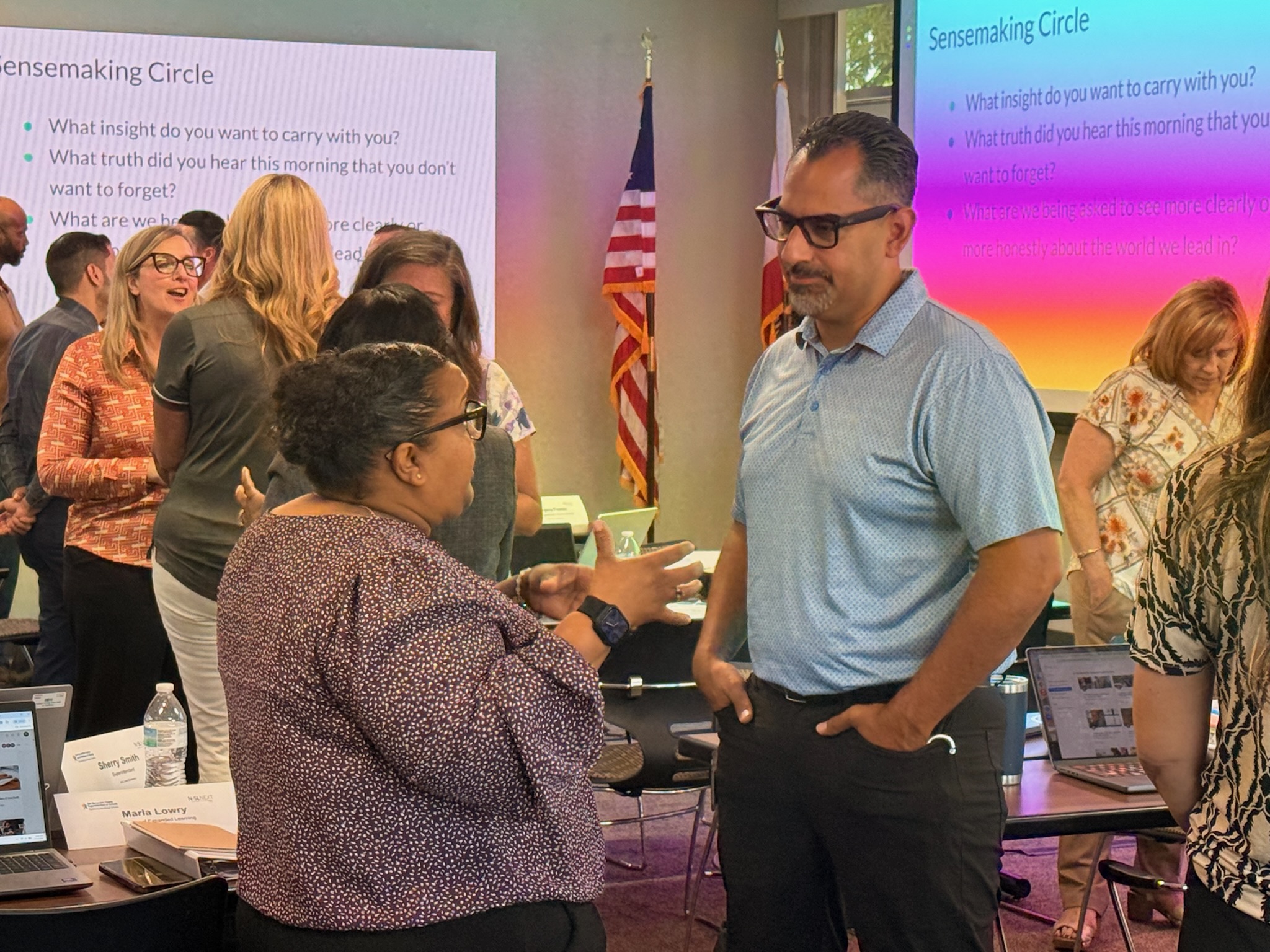
“You can’t be reactive all the time. You’ve got to be proactive.” — Superintendent Frank Miranda, Colton Joint Unified School District, CA
By Vicki Phillips
This year, through our work with systems leaders, I’ve spent considerable time with cohorts of superintendents currently leading school districts. From California to Mississippi, some are in their first year in the role, while others have been doing this work for years. They serve communities that differ in size, geography, resources, and needs. But as I’ve listened to their stories about what it means to lead in a world that seems to move faster and change more dramatically by the day, I’ve been struck by how much they have in common.
Here are ten priorities I’m hearing from leaders in schools and districts today:
1. Leaders want to spend less time reacting and more time leading strategically.
Crises, staffing issues, operational demands, and the problem of the day can consume the job. The leaders I speak to are looking for ways to get out of constant reaction mode and spend more time anticipating what their systems will need next.
2. Getting everyone moving in the same direction is crucial, but a lot harder than it sounds.
A district can have a clear strategy at the top and still have very different interpretations of it across departments, schools, and teams. My colleagues in district offices are focused on turning priorities into shared understanding and action throughout the organization.
3. Nobody wants another “silver bullet” program, leaders are looking for lasting change.
Education leaders have seen initiatives come and go. They’re no longer looking for the next program, but focusing on finding out what’s already working, improving it, and creating the conditions for good work to last.
4. Leadership can’t rest on a few people. Today’s leaders are building teams they can rely on.
Even those leaders who put the “super” in Superintendent can’t carry improvement by themselves. Today’s leaders are thinking about how to build the skills and judgment of people throughout the organization, from teachers and emerging leaders to principals and central-office teams.
5. A vision is only as good as a district’s ability to carry it out.
Leaders often know what they want to change. The harder question is how: Who needs to be involved? What has to change? What resources are needed? How do you build ownership? And how do you keep the work going after the initial push?
6. Leaders need to prepare for changes they can’t fully predict.
AI is the obvious example here, but the issue is bigger than any one technology. Today’s leaders are asking how schools should evolve when the knowledge, skills, and experiences students will need are themselves changing.
7. What happens in the central office has to make a difference in the classroom.
Finance, HR, operations, professional learning, and district strategy can feel far removed from teaching and learning. Leaders are focused on making sure the decisions made throughout the system ultimately support better instruction and better experiences for students.
8. Leaders want their communities to understand where they’re going and why.
Leading a school system means bringing people along. Families, educators, board members, community partners, and others need to understand not just what is changing, but why it matters for students.
9. Leaders need other leaders to learn from and connect with.
Particularly in smaller districts—or in senior roles where there may be few true peers nearby—leaders want opportunities to compare experiences, test their thinking, see how others have approached similar problems, and realize that they aren’t alone.
10. Leaders want opportunities to focus on their own growth, too.
Much of a leader’s time is spent developing others and strengthening the organization around them. But leaders also want space to focus on themselves—to reflect on how they lead, challenge their own assumptions, sharpen their judgment, and continue growing, no matter where they are in their careers.
When I think back to my own time in school and system leadership, it was exactly this kind of support that made all the difference in who I became as a leader. I was fortunate to connect deeply with a cohort of leaders facing many of the same challenges. Together, we could step outside the urgency of the day, reconnect with why the work mattered, and think more deeply about the leaders we wanted to be and the systems we wanted to build. That’s why we’ve created NISL NEXT, to give today’s leaders the support they need to face tomorrow’s challenges.

NISL NEXT is a transformational learning journey for school and system leaders who are ready to shape the direction of systems and lead with greater intention.
The program is an invitation to a different way of thinking about leadership and the future of education. It moves away from conventional leadership development into something far deeper, a journey that explores not only what leaders do, but who they are when they are leading at their best. It’s a path from inner clarity into purposeful action.