October 2026

Global Dispatch is a monthly examination of the research, developments, and questions shaping education and economies around the world. In this issue, we turn to Ireland, one of NCEE’s high performers and a global leader in reading.
We examine the factors behind Ireland’s strong reading performance, speak with the Chair of Ireland’s National Convention on Education about young peoples’ role in shaping education policy, and compare the country’s return on investment with peer countries. We also share a snapshot of NCEE’s recent visit to Ireland to explore the country’s assessment and accountability system.
Want to get the Global Dispatch straight to your inbox each month? Sign up now
Q&A with Anne Looney
Anne Looney is Chair of Ireland’s National Convention on Education and former Executive Dean of the Institute of Education at Dublin City University. Established by the Irish government, the Convention brings together parents, educators, and other education stakeholders to recommend a long-term vision for Ireland’s primary and secondary schools. Young people are full members, making up one-fifth of the Convention, and deliberate and vote alongside the adults.
Why include young people in this work?
Children and young people in Ireland have a legal right to be consulted on policies that affect their lives. Usually that has meant a separate process: they meet in another room and their views are fed into the adults’ work at the end. Ireland has been moving toward having young people take part directly in shaping policy, so for the Convention they are at the table as full members, ages 8 to 21, at the table for every discussion and voting on every recommendation. The 8-year-old has one vote, and so does the head of the largest teacher union in the country.
How is their role structured so they are co-designers, not just advisors?
We put a lot of thought into scaffolding and supporting the children and young people so they can engage fully. They can come in a day early for a preview of each meeting, including mini-presentations from some of the researchers, so they know what’s coming. Two of my deputy chairs are dedicated to the children and young people’s group, and their job is to make sure that group’s voices are heard.
We also let them lead. Before we began, we spent a long time debating whether they should sit at their own tables, until we realized that wasn’t our decision to make. They should discuss it, and they should choose. Most chose to sit with adults, two or three to a table, so that no one is on their own.
What impact have they had so far, and has anything surprised you?
They’ve changed the conversation. Adults tell us that having young people at the table makes discussions more respectful and more thoughtful. Things slow down, people explain themselves in plain language, and everyone checks that others are following. After the second weekend, some adults were disappointed to be at a table with no young people. There simply weren’t enough to go around.
It’s also been a reminder that good deliberation takes time. And young people bring a certain impetus. They have little patience for “you could never do that,” and they’re not slow to say that’s simply not good enough.
Honestly, I was skeptical at the start. I worried about tokenism and about the level of debate. I genuinely could not see how it would work. I’ve been blown away by the impact on the quality of the debate, the atmosphere, and the values in the room.
What have you learned from this process?
That children and young people bring a fresh perspective to old and knotty problems. When you’re setting a vision 25 years out, most of the adults in the room are well through the school system. Having people at the table who are in it right now brings a real sharpness to the debate.
And that it can be done. It requires a lot of thought about how best to support and organize it, and the best guide is the children and young people themselves. The first step is to ask them how, and then, when they’re in the room, it is enormously beneficial, for them and for us.
The Convention’s presentations and its podcast are available on the Convention on Education website.
Chart of the month: Low Spender, High Performer
NCEE recognizes education systems that stand out for their performance, equity, and effective use of resources. In 2026, Ireland earned NCEE’s Efficiency Badge, which measures return on investment in performance and later life success and earnings. The country’s excellent performance does not cost more – in fact, Ireland spends less per lower secondary student than the OECD average, and far less than the United States and Norway, one of the highest spenders.
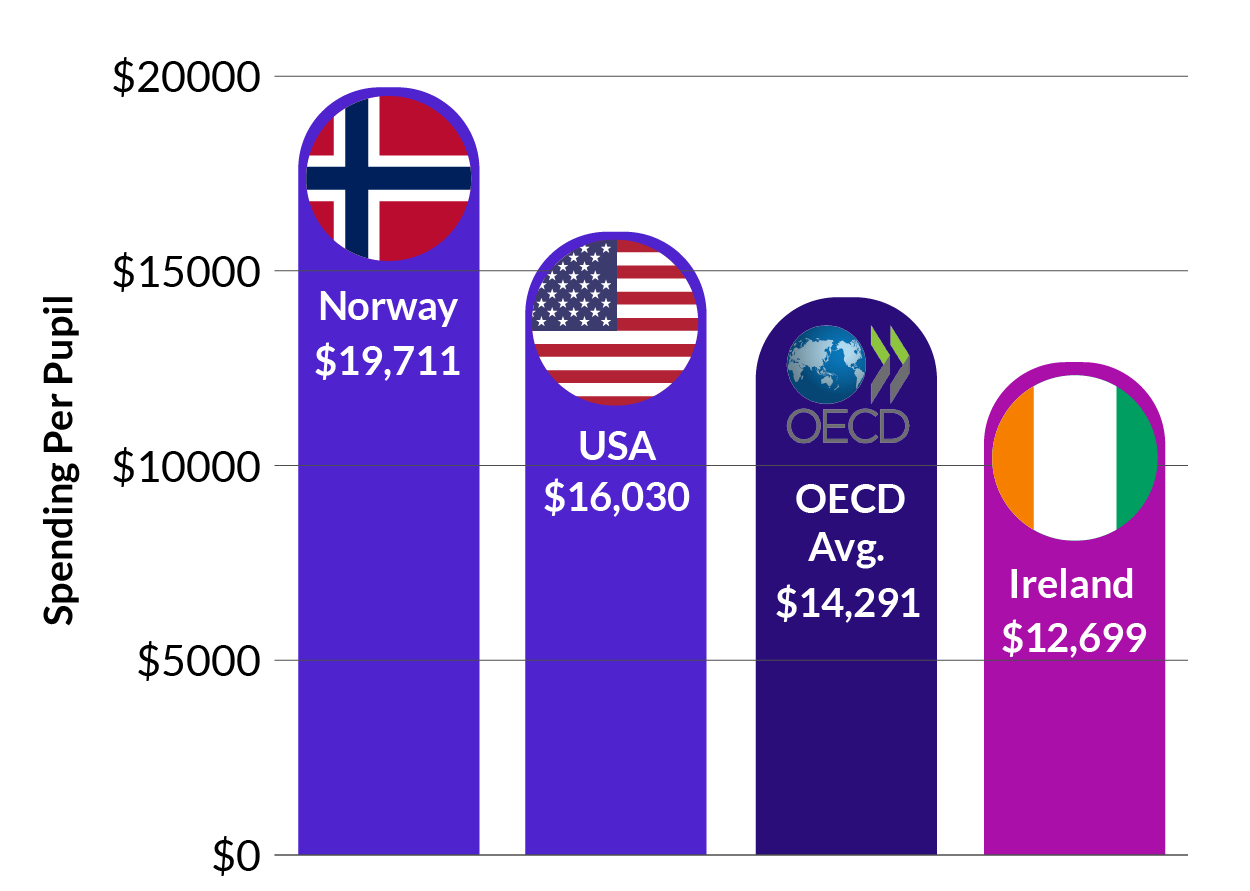
US data are for 2022; all other data are for 2023. Figures are in USD converted at purchasing power parity.
Deep Dive: Ireland’s Reading Advantage
Ireland is one of the world’s strongest-performing education systems in reading, ranking first in Europe and seventh internationally according to the 2025 PISA results. But that was not always the case.
In 2009, Irish 15-year-olds scored about the OECD average in PISA reading – a shocking result for a country with a strong literary tradition and cultural association with reading. These average results served as a wake-up call for a country that saw itself as a reading nation.
To tackle this, Ireland launched a National Strategy for Literacy and Numeracy in 2011, with the goal of strengthening the system’s capacity to teach reading well. The Strategy set national targets and reinforced several parts of the system: giving greater attention to literacy in initial teacher education and professional development; expanding national monitoring and reporting of literacy achievement; developing a primary curriculum that integrated literacy across subjects; and providing guidance and support to help parents and communities support children’s literacy. It also gave school leaders a stronger role in leading literacy improvement.
Although subsequent analysis found that the 2009 result overstated the underlying decline, the effort brought policymakers, schools, teachers and other stakeholders together around the need for more deliberate and sustained attention to literacy.
The country’s emphasis on literacy is evident in classrooms, where Ireland’s strong literary tradition shapes everyday practice. One striking feature of Irish education is the extent to which students read full-length novels starting at 3rd grade. This extends far beyond English classes, with schools incorporating novels into other subjects, embedding literacy across the curriculum while also giving students sustained experience engaging with longer, more complex texts.
Despite its success, Ireland’s performance in reading has declined since 2018, mirroring a broader trend across OECD education systems. Part of the challenge may be that reading itself is changing. Increasingly, it means navigating digital environments, evaluating the credibility of information, moving between formats and sources, and making sense of texts in a world shaped by algorithms and AI. Yet these new demands still depend on foundational reading skills — skills in which Ireland has demonstrated strength and that may give the country a strong footing moving forward.
Ireland’s reading story is not simply about rising to the top of the international tables. It is also a story of how a system responded to evidence: by developing shared goals, building capacity and sustaining attention to reading across the education system. The next test is whether those strengths will serve Ireland as well in a world where reading is changing.
For more about Ireland’s system see Staying the Course on What Matters Most: Ireland’s Education System.
NCEE in the World: Ireland
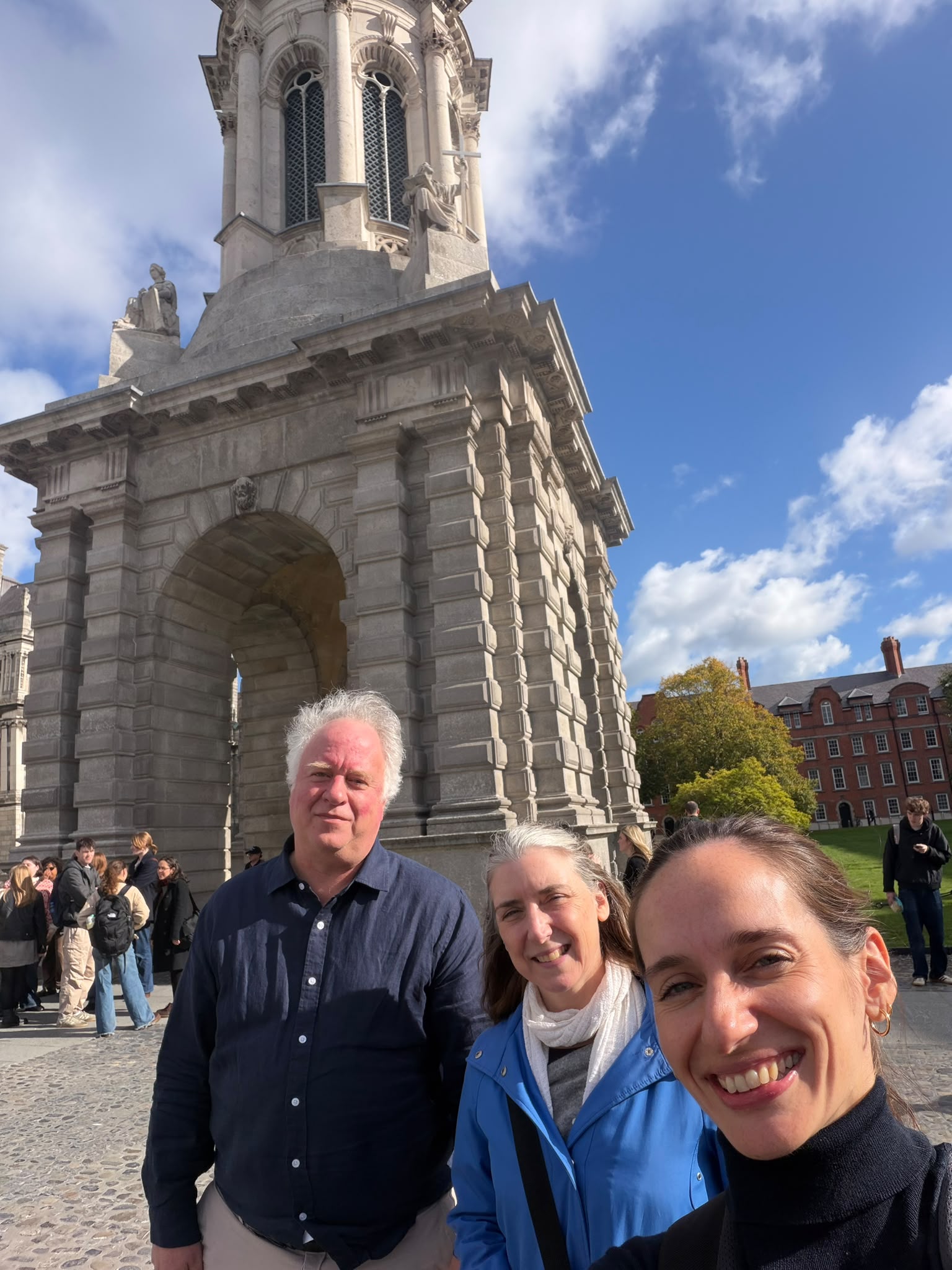
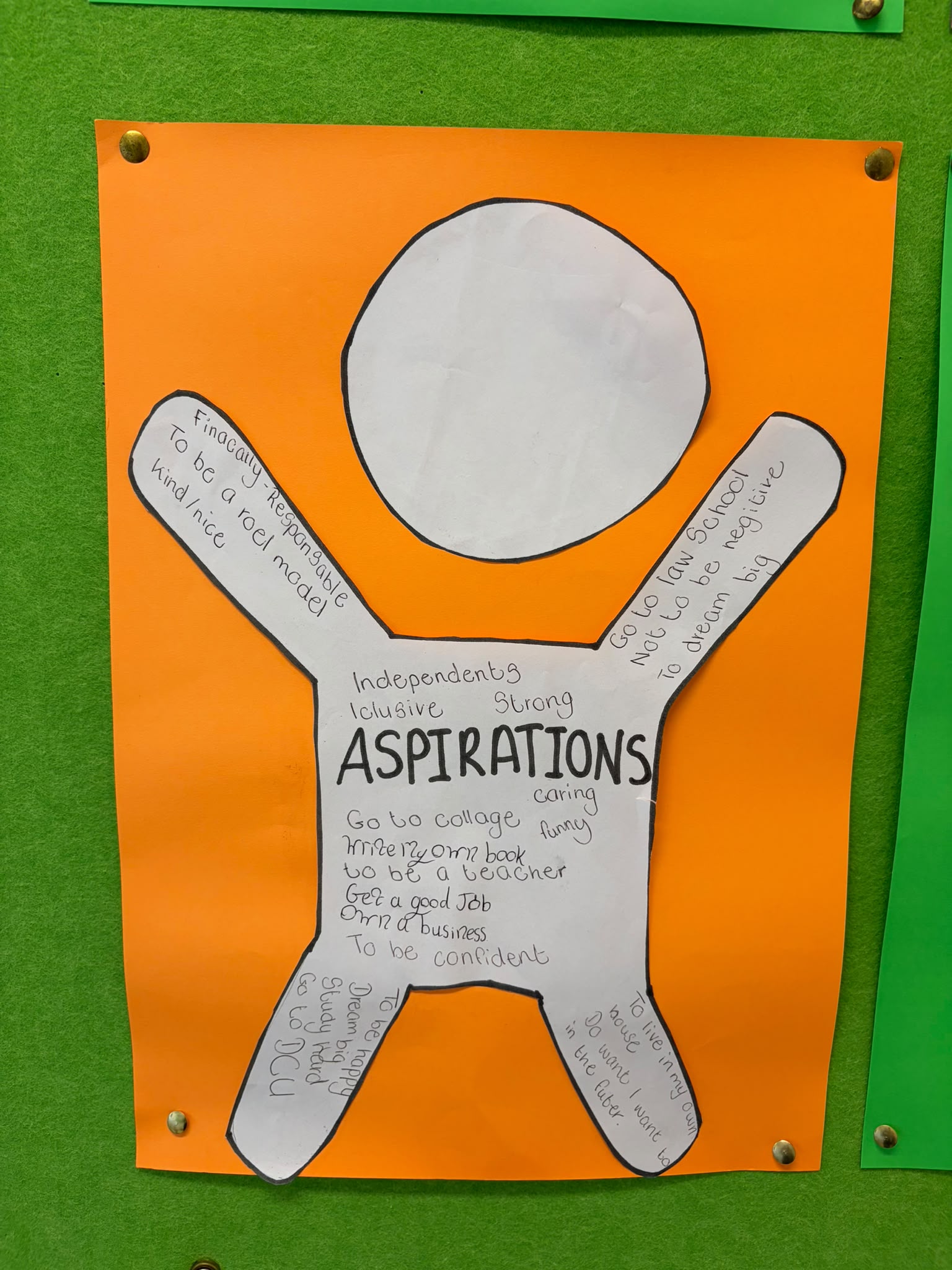
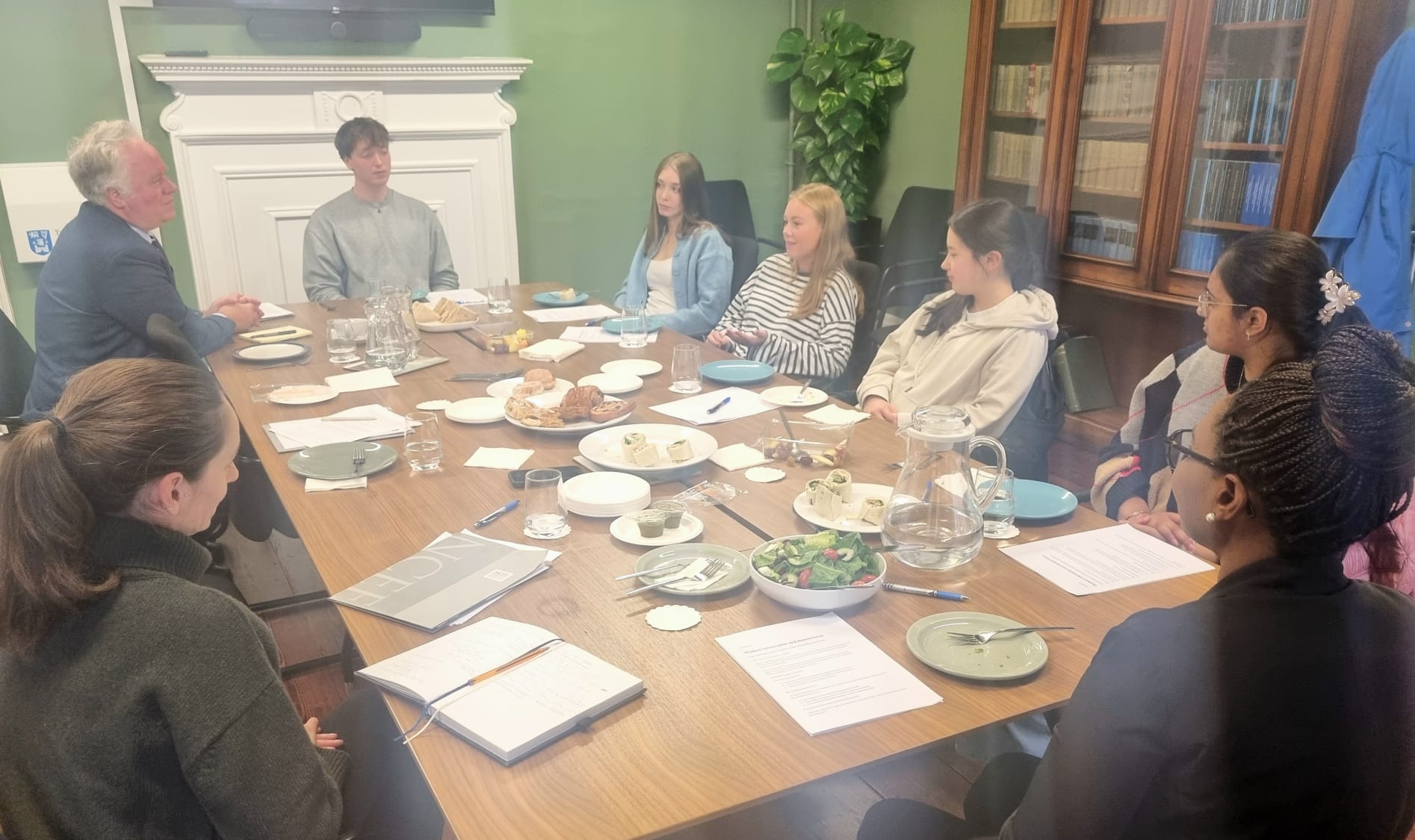
This month, NCEE’s Programmatic Benchmarking team was on the ground in Ireland for our study of assessment and accountability systems in high-performing systems. The study looks at how systems are extending assessment to include future-ready skills, balancing accountability across key actors in education, and meeting the challenge AI poses to assessment.
NCEE’s Chief of Global Strategy and Research Tracey Burns, Director of Programmatic Benchmarking Arthur McKee, and Consultant Manuela Fitzpatrick visited schools and spoke with a diverse group of stakeholders, including university, employers, teachers, students, parents, and a former Minister of Education.
Get The Global Dispatch straight to your inbox each month
Each issue draws on evidence and experiences from across education systems, offering a global perspective for those studying, leading, and influencing the future of education.
"*" indicates required fields