
By Chris Carter
In a single school year, the average student spends 581 of 720 available hours on assignments that are not high-quality. (EdReports)
That won’t pass in Denver.
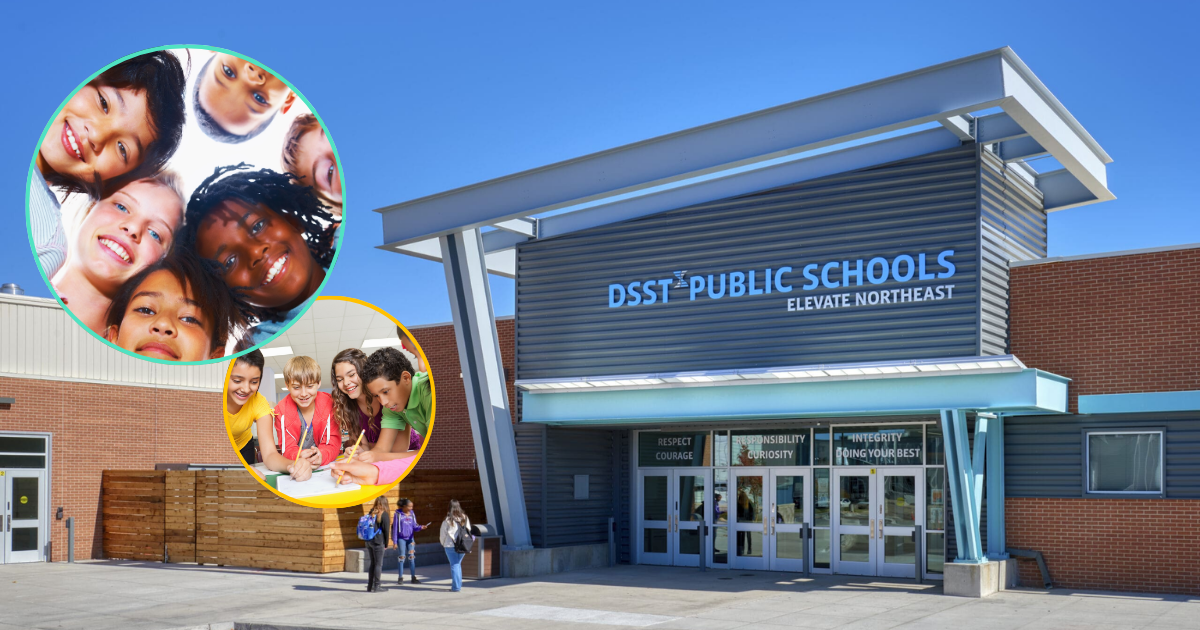
Leaders with the Denver School of Science and Technology (DSST) recently invited me to tour Elevate Northeast Middle School in Denver, CO. Elevate educators and families, and DSST more broadly, have implemented the Educurious project-based learning (PBL) middle school social studies curriculum as their tier 1 instructional materials or high-quality instructional materials (HQIM).
As we toured Elevate, we made some interesting classroom observations:
- 100% of students were engaged.
- Teachers were prepared, making it easier to get students excited.
- Students had a plan—they knew where they were going and why.
- Students collaborated in pods, actively exchanging ideas.
- Students were bringing what they learned in previous units to their work.
These observations reflect what many school systems aspire to: students deeply engaged in meaningful work, teachers facilitating inquiry-based learning, and leaders cultivating coherence across classrooms and schools. The teaching and learning I witnessed at Elevate were evidence of a system building on its momentum.
DSST is a network of 16 middle and high schools in Denver and Aurora serving 7,500 students. They are nationally recognized for their college success—100% of DSST’s graduates have been admitted to college since 2008. In 2025, DSST made history when 15 of their 16 schools earned a Green rating on Colorado’s preliminary School Performance Framework (SPF)!
“We must meet the expectations of the state of Colorado, called the SPF. For our families, results matter because they confirm that each child’s school is meeting and exceeding Colorado’s expectations in the areas that matter most: academic growth, academic achievement, postsecondary success.” (DSST, September 25, 2025).
Project-based learning engages and empowers students; it encourages deep learning of the content and skills needed to lead fulfilling lives and to make positive contributions to society. By making learning personally and socially meaningful, students have a sense of purpose in school, and teachers are motivated to stay in the profession and help students engage with topics that matter to all of us.
Effective PBL relies on a framework that ensures rigor and educational continuity. Equipping school systems such as DSST with an instructional framework supports sustainable shifts toward a shared vision. (If you are interested in learning more about how PBL supports deeper learning, sustained inquiry, and meaningful student engagement, check out our brief, Designing PBL.)
A framework alone is not enough; schools need high-quality instructional materials to work with. 96% of teachers use Google to find lessons and materials. This leads to inconsistent quality that has a greater impact on students who are the furthest from opportunity. (Rand 2017; EdReports)
By having high-quality instructional materials as their foundation, school systems such as DSST are maximizing teacher planning time and the time students are engaging with high-quality grade-level tasks and content.
We’ve seen that project-based learning doesn’t just change what happens in classrooms; it transforms the culture of teaching and learning. When school systems like DSST adopt high-quality PBL curriculum, teachers move more squarely into facilitating inquiry with purpose, students take ownership of their learning, and leaders begin to see coherence across classrooms grounded in shared goals and evidence-based practices.
That is how you Elevate.