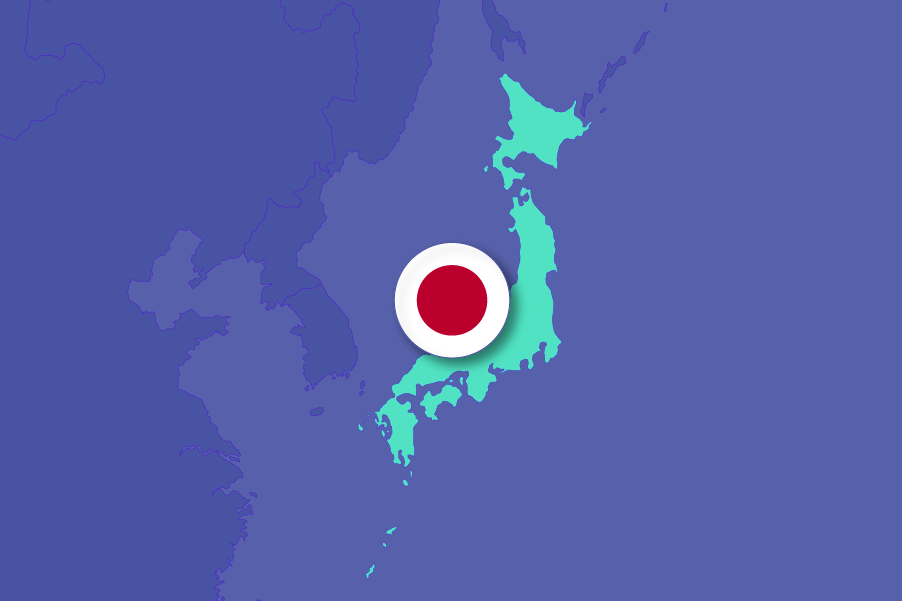
Japan
Context
Japan consistently performs well on major international education assessments, including the Programme for International Student Assessment (PISA) and the Trends in International Mathematics and Science Study (TIMSS). Japan has ranked among the top performers on both PISA and TIMSS since 2000, particularly in mathematics, and its scores have been highly equitable. On the 2022 PISA, for example, only 12 percent of Japanese students were low performers in math, compared to the OECD average of 31 percent, and the overall impact of socio-economic status on student performance in that subject was also measured at 12 percent, below the OECD average of 15 percent. Scores in Japan also tend to show low levels of variance in performance across schools.
Japan has long held education and teachers in high regard. Since the end of World War II, the country has embraced the idea of an “all middle-class society,” where access to opportunity is a function of effort and merit determined by school achievement. While universal primary school has been available in Japan since the early 20th century, access to higher education was extremely selective until the 1940s. After World War II, the education system became more democratized: compulsory school was extended from six to nine years, and higher education was expanded through the establishment of nearly 150 new universities. Japan has a common curriculum with uniform expectations for all students.
Japan’s belief in the idea of achievement through hard work, combined with its reliance on test results for admission to secondary schools and higher education, have led to a thriving after-school tutoring culture, propelled by ambitious parents. Known as juku, these tutoring schools are attended by more than half of all Japanese students. They have raised concerns about access for all students, as they are expensive. The Japanese government has tried a variety of policy responses to limit attendance at juku but has not succeeded in significantly decreasing their influence.
Japan’s current priorities for its schools include advancing digital transformation throughout the system, fostering skills needed for a globalized society (including English language, computer programming, and geography), and promoting equitable access to compulsory education for all students. Japan also faces challenges related to its declining birthrate—a 35 percent decline in population is predicted by 2070—and falling enrollment in both primary and secondary school, as well as higher education. The country has focused on how to downsize some sectors of its schools fairly and in ways that will further Japan’s goals for its economy and society.
Japan is also focused on expanding and strengthening technical education and has created new professional higher education institutions with strong ties to industry as part of this effort. Alongside this reform of higher education, Japan has pledged 1 trillion yen ($7.5 billion) on upskilling programs, with an aim of shifting focus to growth sectors and encouraging ongoing learning for all workers.
Quick Facts

Population: 123,201,945 (2024 estimate)
Population growth rate: 0.4% (2024 estimate)
Demographics:98% Japanese, 0.6% Chinese, 0.4% Vietnamese, 0.3% Korean, 1% Other
Languages: Japanese

GDP & Spending
Real GDP per capita: $46,200 (2023 estimate in 2021 dollars)
Education Spending: 3% of GDP (2022 estimate)

Key Industries: automotive manufacturing,
electronic equipment, machine tools, steel and
nonferrous metals, ships, chemicals, textiles, processed foods

Post-secondary Attainment:
Ages 25-34: 66%
Ages 25-64: 56%

Unemployment
Adult: 2.6% (2024 estimate)
Youth Not in Employment, Education, or Training (NEET): 3.7% (2023)
Poverty Rate: 15% (2021)
System Governance
Roles and Responsibilities
The Ministry of Education, Culture, Sports, Science, and Technology (MEXT) is responsible for the education system from early childhood to higher education, including setting the national curriculum for primary and secondary schools and approving aligned textbooks; operating teacher and administrator certification programs; setting educator pay scales; and establishing requirements for setting up schools and accrediting post-secondary and higher education institutions.
MEXT has a Central Council for Education, which provides advice for the Ministry. There are five sub-councils, including ones for Education Systems, Lifelong Learning, Primary and Secondary Education, Sports and Youth, and Universities. MEXT has key sub-agencies, including the National Institute for Education Policy Research (policy research and evaluation); the National Institute of Science and Technology Policy (supporting STEM and technology education); and the Japan Institution for Higher Education and Evaluation (higher education accreditation).
Japan has also created new government agencies that work in partnership with MEXT. These include the following:
- Digital Agency, created in 2021, aims to drive digital transformation and build an inclusive digital society with modernized infrastructure and public services.
- Children and Families Agency, created in 2023, coordinates policy across several ministries (including MEXT) to better serve children, especially those living in poverty or suffering from abuse. The agency also aims to make it more affordable for families to raise children, in consideration of Japan’s declining birthrate.
The country is divided into 47 prefectures, the largest subdivision for local administration in Japan. Each prefecture has its own municipalities, which can be towns, villages, or cities. Governance of primary and secondary schools is divided among these levels of government. Prefectures play a significant role in resource and personnel management. Municipalities are responsible for the supervision and day-to-day operation of schools.
At the prefectural level, there is a board of education composed of five members appointed by the governor. This board is primarily responsible for appointing teachers to secondary and special education schools and funding municipalities. Until 2015, these boards appointed the superintendent of education at the prefectural level, but they now advise the governor of the prefect on the choice of superintendent. The governor makes the appointment.
At the municipal level, there are also boards of education, and members are appointed by the mayor. These boards are responsible for making recommendations to the prefectural board of education on teacher appointments for municipal primary and lower secondary schools; choosing textbooks from the MEXT-approved list; conducting in-service teacher and staff professional development; and overseeing the day-to-day operations of primary and lower secondary schools.
Goal Setting and Planning
Japan’s Basic Act on Education (2006) mandates that MEXT develop periodic plans for the promotion of education. The plans outline objectives for improvement as well as indicators of progress toward those objectives. Japan issued its first Basic Plan for the Promotion of Education in 2008 and has issued one every five years since then. The most recent plan (2023) identifies significant challenges facing Japan’s workforce, including stagnating labor productivity and workforce shortages, as well as the declining birthrate and aging population. It outlines a post-2040 vision for a sustainable, future-facing education system that includes specific initiatives to promote lifelong learning, enhance well-being and inclusivity across the country’s populations, and accelerate digital transformation within education.
Japan continues to plan for its digital transformation, especially within the education sector. The government issued a national artificial intelligence (AI) strategy in 2017, and a newly created Digital Agency developed a Digital Transformation Strategy in 2022, which aims to leverage technology to propel economic growth, revitalize communities, and optimize government services. Japan’s commitment to a “people-friendly” approach is underpinned by the development of the broad human resources policies needed to guide this technological transformation. In 2025, the agency released an accompanying Digital Education Roadmap, which includes strategies to reduce teacher workload, diversify learning environments, enhance the ability of both teachers and students to monitor learning progress, develop lifelong data analysis skills, and expand data-driven research and policy for education.
Accountability
For primary and secondary schools, Japan conducts systemwide monitoring assessments and inspects individual schools. The National Assessment of Academic Ability tests all students in grades six and nine in Japanese, science, English language, and mathematics. Average scores are shared with schools and prefectures in order to identify struggling schools or problematic policy areas.
Municipal and prefectural boards of education supervisors (typically former teachers and administrators) periodically inspect schools based on a national framework and are expected to provide external guidance on school management, curriculum, and teaching. Schools are also required to conduct a self-evaluation each year. The Japanese government has developed an innovative practice of circulating teachers and administrators among prefectural schools to ensure that all students have access to quality instruction.
MEXT-certified agencies, including the Japan Institution for Higher Education Evaluation (JIHEE) and the Japan University Accreditation Association (JUAA), are dedicated to external evaluation and accreditation of higher education institutions. MEXT collaborates with the Ministry of Health, Labour, and Welfare and the Children and Families Agency to monitor early childhood programs.
Financing
Japan funds its public schools through a combination of support from the national, prefectural, and municipal governments. For primary and lower secondary schools, prefectures pay two-thirds of teachers’ salaries, and the national government pays the remainder. Japanese high schools have traditionally charged tuition fees, although the government has long subsidized these for low-income families. In 2025, the subsidies were extended to all families, so public high schools are now tuition-free for all students.
Most Japanese primary and lower secondary schools are public, but close to one-quarter of upper secondary schools are private. The Japanese government contributes to the costs of these schools through tuition subsidies for students and capital grants to cover specific costs, such as new buildings and equipment.
MEXT also funds public colleges and universities and directs significant subsidies to private universities and colleges. The Ministries of Health, Labor and Welfare, and of Economy, Trade, and Industry also contribute to the costs of adult education and worker upskilling.
Preparing for Long Life Learning: Preschool to Secondary
Preschool
In Japan, three- to six-year-olds typically attend half-day kindergarten (yōchien) programs governed by MEXT. Some families prefer to send their children to childcare centers (hoikuen), which offer full-day programs for children from birth to age six. Kindergartens are considered more academically oriented than daycare centers, but both employ teachers with two-year degrees, share many curricular elements, and emphasize child-centered activities and play. Guidelines for kindergartens are similar to those for childcare centers. Certified centers (nintei kodomoen) are new models that integrate features of both hoikuen and yōchien, offering both childcare and education for children from infancy to age six.
In 2024, 98 percent of four-and five-year-olds were enrolled in early childhood education and care, ranking Japan in the top ten among OECD and partner countries in terms of enrollment.
Primary and Secondary Education
System Structure
The school system in Japan consists of six years of primary school, three years of lower secondary school, and three years of upper secondary school. There is a small but growing set of schools that combine lower and upper secondary education, which allows students to move directly to the upper grades without having to apply to upper secondary school. Students are required to attend school for a minimum of nine years, although almost all students enroll in and graduate from upper secondary school. Students in Japan typically stay with the same teacher in the early years of primary school. After that, student cohorts generally stay together with a homeroom teacher for the remaining years of primary school, and then again in lower secondary school. Subject teachers often teach the same student groups for multiple years as well. These practices tend to foster strong, lasting relationships between teachers and families, while also allowing student cohorts to build a sense of community over multiple years together.
Students choose between general or vocational upper secondary schools, called specialized high schools. Most students—about 75 percent—choose general upper secondary schools. Admission to these schools is competitive, and the schools are informally ranked based on academic selectivity and university placement records. Each school has its own admissions process and requirements, but most require students to take an entrance exam. Students who choose specialized high schools take core academic courses while also concentrating on a specific career area (such as agriculture, industry and commerce, fisheries, domestic arts, or others). Graduates of specialized high schools can apply to university, although they sometimes need to take additional courses to prepare for the university admission exam.
Japan has also created a network of “Super High Schools,” upper secondary schools that focus on STEM, Global Studies, or Professional Studies. Schools apply for the “super” designation by submitting a proposal to MEXT, which administers grants for the program. Only a small number of high schools receive this designation, and as a consequence, are considered highly prestigious. “Super” schools provide students with enriched offerings, such as lectures by college professors.
In addition to specialized high schools, there are two other vocational options for upper secondary school students. Only a small percent of students enrolls in either. The first is Kosen Colleges, or colleges of technology, which provide five-year programs in a variety of technical and engineering areas (electrical, mechanical, civil, material, and biological), leading to a combined secondary school certification and an associate degree. Some colleges also offer an additional two-year advanced program for students wishing to earn bachelor’s degrees. Most students go on to full employment after graduation, though a portion elect to continue on to university. Kosen Colleges are highly competitive, and there are only about 50 nationwide.
The second option is to complete an upper secondary program at a specialized training college. The colleges offer vocational education in eight fields: technology, agriculture, medical care, personal care and nutrition, education and welfare, business, fashion, and general education. This pathway grants students a completion certification, not a full graduation certificate, but enables students to move on to post-secondary diploma options at these colleges or other institutions.
More than half of Japanese students spend significant time each week in private tutoring centers, or juku, to prepare for key school and university admissions exams. This has raised significant concerns for the Ministry about equity of access and student well-being, given the societal focus on doing well on exams. MEXT has introduced public alternatives to juku, such as community-based after-school tutoring run by local volunteers and retired practitioners (Chiiki Mirai Juku), as part of a way to ensure access to support for those who want it, and expanded and more varied after-school options to provide alternatives for students.
Japanese students attended primary and secondary school six days a week until 2002, when the Saturday school day ended. In 2013, however, the Ministry permitted schools to reinstate Saturday classes at their discretion, reasoning that attending school on a sixth day was preferable to spending weekends at juku centers. During the COVID-19 pandemic, the Ministry encouraged schools to use Saturdays to address learning loss.
Standards and Curriculum
The Ministry of Education, Culture, Sports, Science and Technology (MEXT), in conjunction with the Central Council for Education, establishes broad guidelines for the content of each school subject from kindergarten through upper secondary school. Ministry specialists prepare teacher guidebooks in each subject with input from experienced teachers. While teachers may adapt the material to suit classroom needs, they are expected to follow the national curriculum.
MEXT revises the national curriculum about once every decade. Each new curriculum is rolled out in stages, with the most recent revision implemented from 2020 to 2022. The next version is expected to be finalized in 2026 and implemented by 2028. The 2022 curriculum revisions were organized around three themes: motivation to learn and apply learning to life; acquisition of knowledge and technical skills; and skills to think, make judgments, and express oneself. The curriculum promoted active learning across all courses to further develop long-valued cross-curricular competencies such as problem-solving, creativity, and good learning habits. The revisions also added English to the curriculum in grades 5 and 6, with informal English language instruction starting as early as third grade, with the goal of preparing Japanese students to thrive in a globalized world. Computer programming was also introduced as a required subject in primary and high school, and coursework in scientific exploration and geography was added to better reflect changing skills needs.
Currently, Japan’s primary school curriculum is divided into three main categories: compulsory subjects, moral education, and special activities. Compulsory subjects include Japanese language, Japanese literature, English, mathematics, social studies, science, music, computer programming, arts and handicrafts (arts and crafts), and physical education. Moral education aims to teach students to respect one another, the environment, and the rules of society, and to learn general self-control. Special activities refer to activities and events that emphasize teamwork and cooperation, such as field trips or school concerts.
The compulsory subjects are continued in lower secondary school, with the addition of fine arts, foreign languages (English, French, German, etc.), computer programming, and a greater array of elective courses. The upper secondary curriculum continues compulsory subjects but also includes science inquiry and social science inquiry courses. Computer programming was added to the upper secondary curriculum in 2022.
In addition to these compulsory subjects, Japanese schools promote food and nutrition education (shokuiku). All students participate in lunch duty (kyuushoku-touban), which involves collectively preparing, serving, and eating a school-provided lunch together in their classrooms each day. Teachers discuss nutrition and healthy eating as the students are preparing the meal. This is part of a larger effort to implement tokkatsu, or a broad range of non-academic but structured school activities, which include taking care of the school, cooking meals, and volunteering in the community.
MEXT cooperates with the Ministry of Health, Labor, and Welfare to promote after-school education, which is offered at all Japanese schools. In 2018, the “New General After-School Children’s Plan” established national goals to encourage primary schools to collaborate with community organizations to provide after-school programs, as well as increase the number of children attending. The aim is to relieve teachers from leading after-school programs and also encourage student participation in activities beyond juku.
Assessment and Credentialing
The first major gateway in Japanese education is the entrance to upper secondary school. Most schools require entrance exams that are developed by the school or by localities. Admission to popular and/or academically prestigious upper secondary schools can be extremely competitive, with schools weighing each student’s performance on entrance examinations and academic records. Some schools also consider student participation in extra-curricular or volunteer activities. The school a student attends is considered a determining factor in later success.
While Japanese students were formerly admitted to university largely based on their scores on a national university admission exam, admissions practices have grown more comprehensive in recent years, mostly due to reduced competition because of a declining student population and a growing emphasis among universities on diverse abilities beyond academic prowess. The national test assesses candidates in five areas: Japanese language, foreign language (usually English), math, science, and social studies. In 2017, MEXT began an update of the national admissions examination amid concerns that the test’s emphasis on rote memorization did not align with the demands of the changing economy. A revised national examination, called the Common Test, was introduced in 2021 and is designed to assess critical thinking, judgment, and expression with constructed response items, multiple choice questions, and an expanded English language writing and speaking skills section. While some universities and junior colleges require applicants to take additional entrance exams alongside the Common Test, others have begun admitting students based on recommendations from upper secondary schools rather than relying solely on test scores.
Teachers at all levels of schooling assess their students through practitioner-developed tests and other forms of summative and formative student work. Teachers are expected to maintain close communication with students and their families through periodic conferences, school events, and, in some cases, home visits. As a result, teachers can holistically assess individual students’ progress and share important information with their families to support their development.
Japan administers national assessments—the National Assessment of Academic Ability (NAAA)—in grades six and nine. These assessments cover mathematics, Japanese, science, and, since 2019, English language. NAAA was first administered in 2007 to a sample of students to inform curriculum and policy planning. Since 2013, the assessments have been administered annually to all students, with the goal of providing more performance data to districts and schools. The test includes items assessing subject-matter knowledge as well as the ability to apply knowledge to real-world situations; in 2019, these sections were combined to reflect the revised curriculum. The Ministry plans to shift the NAAA to a digital format by 2027, with science and English language components already being piloted online. Test items are released publicly after they are used so that parents, students, and teachers understand what to expect on these examinations.
Digital Resources
Before 2020, the Japanese education system had been relatively slow to adopt digital technology and online learning. When schools closed due to the COVID-19 pandemic, only about five percent of Japanese schools were prepared to shift to online learning. Since then, however, Japan has made concerted efforts to accelerate digital learning. In 2021, MEXT released Education in Japan Beyond the Crisis of COVID-19, which outlines the Global and Innovative Gateway for All Schools program (GIGA). This program provided electronic devices for all students, equipment to support learning from home, and an information and communications technology (ICT) infrastructure for schools to establish online learning and standardize educational data collection. As part of this effort, MEXT also began to pilot AI-powered digital textbooks in 2022, starting in primary schools with English language texts, and is now moving toward system-wide adoption for all school levels and subjects. Japan’s new Digital Agency is also working with MEXT to create an online learning system that serves the needs of all school-aged children.
Learning Supports
Struggling Learners
Teachers at all levels of schooling communicate regularly with the families of their students and provide information and advice to parents whose children are struggling. In addition to this regular level of support, Japan offers a community-run tutoring program (Chiiki Mirai Juku) to help students who are struggling academically. Although the program began in 2015 as part of a government effort to combat child poverty, implementation is determined by local municipalities, which may choose to serve all struggling students, regardless of family income, and often hire local teacher candidates as tutors. In recent years, the program has increasingly utilized information and communications technology (ICT) for enhanced learning support.
In 2023, the government established Diversified Learning (DL) Schools. These schools are designed to accommodate the needs of students struggling with traditional schooling, providing the same graduation qualifications as a traditional school with a more flexible learning environment. As of 2025, there were 35 DL schools, but the goal is to expand the network to 300.
Special Learning Needs
Special-needs education is provided in four ways: in special schools, in special classes within mainstream schools, in special resource rooms (tsūkyū) within mainstream schools, and within the mainstream classroom. The type of special education a child receives is based on their specific needs. All students except those with the most significant special learning needs spend most of their time in mainstream classrooms. As of 2022, about nine percent of elementary and lower secondary, and two percent of high school students were identified as needing special education services.
The national curriculum implemented in 2022 emphasized alignment between instruction for special-needs students in special schools and instruction in mainstream schools. In 2023, MEXT announced plans to commission higher education institutions and local school boards to research and pilot measures that target “twice-exceptional” students, or advanced learners who require additional learning supports. These measures typically include flexible class management techniques, individualized instruction, and collaboration with nonprofit or community organizations to provide enriched instruction.
CTE and Long Life Learning System
Secondary and Postsecondary CTE
Only about 20 percent of 15- to 18-year-olds choose a secondary vocational program in Japan, a much smaller proportion than in other OECD countries, despite government efforts to raise enrollment. The government has taken steps to make CTE more attractive to young people by creating prestigious vocational options and flexible pathways; encouraging collaboration among schools, local businesses, and higher education institutions; and introducing innovative and entrepreneurial curricula to the classroom.
Most secondary students who choose CTE enroll in specialized high schools. Programs are three years long and offer both general education coursework in core subjects as well as specialization in one of seven key industry areas: agriculture, technology, commerce, fisheries, domestic science, nursing, and welfare. Students can also apply to competitive Super Professional High Schools, which offer advanced coursework in these same seven areas. These programs partner with universities, colleges of technology, research institutes, and industry leaders to deliver practical training. They lead to the same secondary diplomas as other vocational programs.
A small number of secondary students also enroll in one of two alternative vocational options: Kosen Colleges of Technology or specialized training colleges. Japan’s 51 Kosen Colleges, for which admission is very competitive, offer five-year programs that incorporate applied learning experiences, including apprenticeships and internships, and culminate in a combined secondary school certificate and associate’s degree. While most graduates go on to well-paying jobs in the engineering industry, a portion elect to pursue bachelor’s or master’s degrees at university. Secondary school students can also take courses leading to a secondary certificate at specialized training colleges.
Most secondary vocational graduates who pursue advanced training go to post-secondary programs offered at specialized vocational colleges or junior colleges. Specialized vocational colleges offer two-to-four-year programs in practical education across a variety of fields, and junior colleges offer two-year practical degrees, most focused on early childhood education and social/human services. These programs have highly successful placement, as they are organized in partnership with industry partners. Secondary graduates can also go on to universities if they take admissions exams, but not many choose this path, other than Kosen College graduates. The remainder of graduates—about one quarter—transition directly into the workforce without a post-secondary qualification, and nearly all do so successfully, in large part because schools play an active role in student job placement.
Japan recently introduced Professional and Vocational Universities (PVU) and Professional and Vocational Junior Colleges (PVJC), which are designed to provide programs in partnership with industry and focus on applied and practical learning. These institutions provide another pathway for students to pursue advanced CTE training.
Higher Education
Japan’s research universities are national (funded by the national government), public (funded by local government), or private. Most students attend private universities, though national universities have the most competitive admissions. All offer undergraduate, graduate, and doctoral degrees. Students pay tuition, with national and public universities significantly less expensive than private universities. Financial aid is offered by institutions, and significant scholarships for low-income students are funded by the government. In 2025, the government expanded tuition reduction programs for families with three or more dependent children as part of a broader initiative to boost the country’s birth rate.
Given the country’s falling population, Japan is currently downsizing its university system by encouraging mergers and reducing subsidies, with a specific focus on private universities. The government is considering equitable ways to downsize while ensuring continued access to universities in all parts of the country and also ensuring that university priorities align with economic goals. Japan recently created a network of Professional and Vocational Universities (PVUs), which work in partnership with industry and offer applied degree programs. These are considered an expanding part of the university system.
Japan’s higher education system also includes colleges. These include junior colleges, which offer shorter programs (often two or three years) that lead to associate degrees; specialized training colleges, which offer two-year degrees; and a set of Vocational Junior Colleges (PVJC), which are designed to expand practical degree offerings beyond human services and education to include a broader set of industry areas. Students also pay tuition for these colleges, which is generally less expensive than for university.
The Ministry regulates the establishment of all higher education institutions and is responsible for quality assurance for the entire sector. Once established, HEIs operate with a high degree of independence. MEXT is also responsible for regulating the approval and operations of Kosen and specialized training colleges.
Adult Education and Upskilling
In Japan, there are two kinds of adult basic education: a strong tradition of informal education for personal enrichment and formal education that leads to academic credentials. The former is primarily delivered through community-based institutions, such as community learning centers and citizens’ universities, which are non-formal educational organizations that provide lecture-driven courses for all ages. Formal education leading to a secondary school degree is offered to adults in night schools, often on a part-time basis. They study the same core subjects as traditional schools and receive an accredited upper secondary school certificate upon graduation. Japan also offers a flexible, distance-based high school education system for adult students as well as younger students in remote areas. They study the same core subjects as traditional schools and receive an accredited upper secondary school certificate upon graduation.
In 1990, Japan passed the Lifelong Learning Promotion Law, which mandated the creation of Lifelong Learning Councils at the national and prefectural levels to coordinate all lifelong learning (LLL) initiatives; required the development of needs assessments to gauge the learning needs of residents; and encouraged prefectural governments to create their own LLL departments. While the law has enhanced education opportunities for people of all ages in Japan, the program’s success has been constrained by limited funding for education providers.
Japan continues to emphasize upskilling and lifelong learning opportunities for adults despite these challenges. Lifelong learning has been a key pillar of the MEXT Basic Education Plans since 2006. Japanese adults can add to their skills through on-the-job training, courses, or certificate programs offered at vocational colleges, junior vocational colleges, and professional and vocational universities. Many Japanese employers subsidize training for their employees. The government also offers other incentives to support upgrade training, including those tied to employment insurance as well as those offered by the Ministry of Employment for those seeking work.
In 2023, the government pledged to spend 1 trillion yen ($7.5 billion) over five years on reskilling programs and opportunities for current workers and stated the intention to “fundamentally enhance human capital investment and shift labor to growth sectors.” The policy encourages public-private collaboration to support employee upskilling and provides subsidies for employer-provided training.
Skills acquired during upgrading are primarily recorded and recognized through the National Skill Test and Certification (NSTC) system administered by the Ministry of Health, Labor, and Welfare. The NSTC tests workers’ abilities, knowledge, and skills against standards for more than 100 job categories. Those who pass are awarded “Certified Skills Professional” certificates, which serve as formal, portable credentials similar to micro-credentials. The government offers subsidies and financial support for adults who choose to upskill, mainly through programs such as the Education and Training Benefit Scheme.
Joining Forces to Ensure All Learners Thrive
Supports for the Well-being of Young Children and Families
Faced with a sharply declining birth rate beginning in the 1970s, Japan has steadily increased benefits for working parents and children. The government has long provided a one-time childbirth allowance to families for each child born and plans to eliminate all out-of-pocket payments associated with child delivery by 2026. Additionally, Japan recently updated the Child and Family Care Leave Act to extend parental leave from 14 weeks to six months at two-thirds salary and another six months at 50 percent salary, with possible extensions of up to two years of paid leave at a reduced rate if parents are unable to find day care options. The government also provides a universal monthly child allowance to parents of children up to age 15, regardless of income, with additional benefits for children of single parents and children with disabilities.
Japan ensures that all families have access to health care. The national health insurance system pays for 70 percent of the cost of family health care; families are responsible for the other 30 percent, although care for children is free, and there are caps on out-of-pocket expenditures for low-income individuals and people with disabilities. Since World War II, Japan has provided all parents with a handbook, which allows parents to track the mother and child’s health, as well as the child’s growth. This handbook is used by almost all parents and health providers in Japan; there are efforts underway to explore digitizing it.
Before 2019, Japan covered less than half of childcare costs through public funds and only subsidized facilities that served 20 or more children. In 2019, the government pledged to provide free childcare for children from low-income families from infancy until age two and for all children from age three to five. High demand initially made it difficult to provide enough spaces, but waitlists have been dropping significantly as facilities have been added or expanded. The Ministry of Health, Labour, and Welfare manages childcare centers in accordance with guidelines that cover the quality of facilities, child-staff ratios, and teacher qualifications. Centers must meet these guidelines in order to earn a license, which entitles them to government subsidies. Municipal and prefectural governments monitor centers. The Ministry of Health, Labour, and Welfare has also developed curriculum guidelines for daycare centers; these are not mandatory to follow, but most centers do.
Supports for the Well-being of School-aged Children
Japan offers comprehensive supports to ensure the well-being of all students, with a strong focus on physical health. Students undergo annual health screenings in public schools at no cost and receive a highly subsidized hot school lunch daily.
There is a growing emphasis on mental health at the school level. Certified school nurses (yōgo kyōin) play a central role in observing, recording, and interpreting student health data and collaborate with teachers to identify students who may be at risk for mental health problems. Schools have implemented social-emotional learning (SEL) programs (including social skills training, group therapy, and stress management education) and have incorporated mental illness prevention and recovery content into high school health and physical education classes, with plans to pilot similar initiatives at the primary and lower secondary levels.
In addition to school-based health supports, the government has also organized a network of Education Support Centers, alternative centers that provide support for young people who have left school for psychological or physical reasons. The centers, run by prefectural and municipal governments, offer academic instruction as well as counseling, recreation, and other activities. About half of all school districts have centers. Starting in 2025, the Ministry of Education will increase subsidies for existing centers and provide funding for additional education assistants to staff them; it also plans to expand the number of centers.
The government also provides targeted financial assistance for low-income students. Students in compulsory education whose families meet income eligibility criteria receive subsidies through two programs: Education Assistance provided by the Ministry of Health, Labour, and Welfare, and Assistance to School Attendance administered through MEXT. These programs cover unsubsidized school expenses, including meals, transportation, supplies, and field trips. Other programs cover expenses such as transportation and school meals for students with disabilities.
Finally, Japan has also focused on supporting the education system in remote areas of the country. The Law for the Promotion of Education in Remote and Isolated Areas, passed in 1954, prioritizes conducting research on education in these areas; providing state subsidies for school infrastructure; and improving access to initial teacher education, in-service training, instructional materials, housing, and healthcare. Teachers in these areas receive an allowance that varies depending on the remoteness of the school, as determined by criteria such as Internet access.
High-Capacity Educators
Teachers
Recruitment and Retention
Teaching is a highly respected, well-paid profession in Japan, and its teaching force has a strong reputation globally as well as nationally. As a consequence, Japan faced an oversupply of teachers for many years. In the last decade, however, this has begun to change, and the country is now experiencing a teacher shortage despite falling student enrollment. Possible explanations include an aging teacher corps and a large wave of retirements, as well as less tolerance for the long hours and heavy workloads for educators, which have long been thought of as a moral duty of teaching. The government has taken a number of steps to improve working conditions for teachers; these include limiting after-school work hours and class sizes, promoting community-staffed after-school clubs and activities to relieve teachers from these duties, reducing the number of classes teachers are responsible for, increasing the number of education-support personnel in schools, and considering how digitalization might be used to decrease teachers’ administrative responsibilities. Many of these reforms are to be implemented beginning in 2026.
Teachers have traditionally been paid as well or better than other civil servants in Japan. While starting salaries are relatively low compared to the OECD average, compensation increases swiftly with experience. Senior teachers earn salaries that exceed the OECD average by more than 20 percent. Teacher salaries do not vary much across the country because they are funded by both the national and prefectural governments.
Preparation and Induction
Japan offers a wide range of teacher preparation programs and most prospective teachers are able to secure admission to one of these institutions; it is at the hiring phase that teaching becomes much more selective. Prospective teachers must first pass a rigorous set of school board exams and evaluations.
All teachers must hold a degree from an institution of higher education. National universities, which receive grants from the national government and are considered the most prestigious, offer certificates for teachers at all levels; public universities, which are run by prefectures and municipalities, and private universities offer certificates primarily at the secondary level. Upper secondary teachers are required to have a bachelor’s or master’s degree. The largest number of teachers are certified at private universities.
Prospective teachers, like all university students, must take the Common Test to be considered for admission into an undergraduate teacher education program. Each university sets its own minimum score for entry into the program. Prospective educators must take courses in pedagogy as well as the subject areas in which they plan to specialize. Primary school programs typically require students to study all curriculum subjects. In 2022, however, MEXT began to promote specialized teaching in upper primary school, with the aim of improving instruction in math, English language, science, and physical education at this level, as well as easing the student transition to secondary school. Educators with significant experience in these subjects are increasingly taking on specialized teaching roles. Secondary school teachers must choose a subject specialization. All prospective teachers must also complete a short teaching practicum before earning a certificate and applying for a teaching position. They are evaluated by an experienced teacher under the supervision of a principal.
Once prospective teachers graduate from their program, candidates must pass a hiring exam overseen by the prefectural board of education. These assessments examine a candidate’s pedagogical and subject area knowledge and often take the form of proficiency tests, essays, and interviews, as well as a demonstration lesson. The requirements vary by prefecture. Teachers are not immediately hired after passing the exam but placed on a list of eligible candidates from which local boards make appointments as vacancies arise. Candidates who are not hired are required to retake the exam, typically in the following year. Until recent years, teacher hiring has been competitive, and not all teacher candidates who pass the Public School Teacher Employment Exam have been hired as teachers. This has been changing, especially for elementary school teachers, and most who are successful on the exam are able to find a job. No classes are taught by teachers without a license. A few alternative pathways to teaching exist, but these are tightly regulated by national and local legislation. The most common include temporary or special teaching licenses for professionals with relevant expertise and coursework to fulfill specific teaching needs.
After being hired, teachers undergo a one-year induction that includes on-site and off-site professional development, totaling about 300 hours, under the supervision of an experienced teacher who acts as a mentor. Both the new teacher and mentor teach a reduced load during the induction period to allow them to work together on classroom management, subject guidance, lesson planning, and classroom teaching. Mentor selection varies across prefectures and even individual schools. In general, mentors do not receive special training or additional compensation.
New teachers are hired on a probationary basis. At the end of their first school year, a teacher may be hired as a fully employed teacher and have access to all teacher benefits, including membership in the teachers’ union. The majority of Japanese teachers remain in the profession until retirement age.
Roles and Career Progression
Teachers must follow the national curriculum, but they are responsible for determining how best to teach it, creating lesson plans, and communicating with families. Japanese teachers are able to move up within schools over the course of their careers, with the most straightforward path being promotion from teacher to middle leadership (either senior teacher or advanced skills teacher), and then to principal. Senior teachers primarily support the principal and vice principal, while advanced skills teachers serve mainly as mentors to other practitioners. At every level, there are multiple steps, each with salary grades based on performance and experience. Some teachers are never promoted to middle leadership, but nonetheless still see steady pay increases over their careers.
Japan is unique in how it assigns teachers to schools. Teachers are hired at the prefectural level rather than the school level. School assignments for teachers change every three to five years when they first start teaching, with fewer changes later in their careers. This practice allows the prefecture to assign the strongest teachers to the highest need schools and students. This rotation not only ensures that the most disadvantaged students have access to the most capable teachers but also helps build capacity within the profession. Young teachers are exposed to experienced teachers across a variety of school settings with the expectation that they will learn from them.
Rather than being transferred to new schools, high-performing teachers in middle-to-late-career stages are sometimes transferred to administrative offices for a rotation, including local boards of education, and are expected to contribute to the prefecture’s educational planning with their practical experience. After several years, they are transferred back to leadership positions at the school level.
Evaluation and Professional Learning
In addition to formal professional development programs, Japanese teachers use “lesson study” to informally learn from colleagues. Principals organize meetings for teachers of varying levels of experience to identify classroom needs, research intervention options, and create a lesson plan that targets the need. One teacher then uses this sample lesson in the classroom, and the other teachers observe. Teachers from other schools may also attend and learn from the model lesson. Following the sample lesson, the group meets again to discuss, reflect, and refine the lesson plan. The process can include an outside expert, such as a university representative, but all feedback is non-evaluative and focused on lesson design. This method of teacher-led research has been adopted in other countries.
Teacher evaluation is required by law and is part of the school self-evaluation process. Teachers set annual goals for themselves and, at the end of the year, evaluate their progress in consultation with principals. In addition, principals and vice principals observe teachers twice a year and provide feedback on their findings. Their observations are intended to improve teaching practices by suggesting areas for professional learning.
Leaders
Roles and Responsibilities
Recommended national guidelines for the role of principal in Japan include setting expectations and short and long-term goals for the school; building a school environment that “takes advantage of the autonomy and ingenuity of staff”; and cultivating external communication and collaboration. Principals are also responsible for planning the school curriculum, based on the national curriculum. They are expected to act as advisors, provide thoughtful guidance to teachers, and demonstrate a “love of teaching.” All kindergartens, primary, and secondary schools must have a vice principal in addition to a principal. Vice principals are often mentored and trained by principals as part of their preparation to assume principal roles in the future.
Recruitment, Preparation, and Development
In Japan, prefectures are responsible for establishing the qualifications to become a principal, developing school leaders, and fostering leadership skills. Most prefectures have age and teaching experience requirements for their principals; national law requires principals to have at least five years of teaching experience and either a specialized license or a master’s degree in teaching. Leadership development programs are often embedded in prefecture-wide teacher training systems.
Principals, like teachers, are rotated among schools every three to five years as part of a broader effort to ensure equity across the system, allow system leaders to assign highly skilled principals to struggling schools, and provide school leaders with diverse experiences. Principals can also move on to supervisory or system leadership positions at the prefecture or even national level.
At the national level, MEXT developed a training curriculum for effective school management. The curriculum is available to local boards of education, schools, and other public training institutions. This curriculum is designed for principals as well as “mid-level” leaders such as vice-principals and head teachers. Additionally, the National Institute for School Teachers and Staff Development (NITS), in cooperation with MEXT, provides national-level leadership training programs for experienced school leaders. It also offers networking opportunities for prospective and new teachers, serves as a research institute focused on quality teacher development, and advances professional training for teachers and school leaders, particularly principals.