
Project-Based Learning that Connects
Discover what learners can do
when science comes alive
Our middle school science courses make science come alive through hands-on exploration and real-world connection. Students investigate big questions about how the world works and discover the power of science in their everyday lives. Through inquiry and hands-on challenges, students develop scientific thinking and problem-solving skills that last.
Each course stands on its own, so schools can choose the sequence that fits their needs while giving every student the chance to think, design, and wonder like a scientist.

Earth and Space
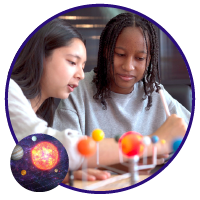
Earth and Space turns big questions into hands-on, real-world investigations—from modeling the Earth-Sun system and tracking storms to analyzing Earth’s surface processes and plate tectonics. Students don’t just learn science, they practice it: building models, analyzing data, and designing solutions to authentic challenges. Each of our six unit features rich phenomena, meaningful tasks, and three-dimensional assessments that strengthen scientific thinking and problem-solving skills.
Earth’s Engineers
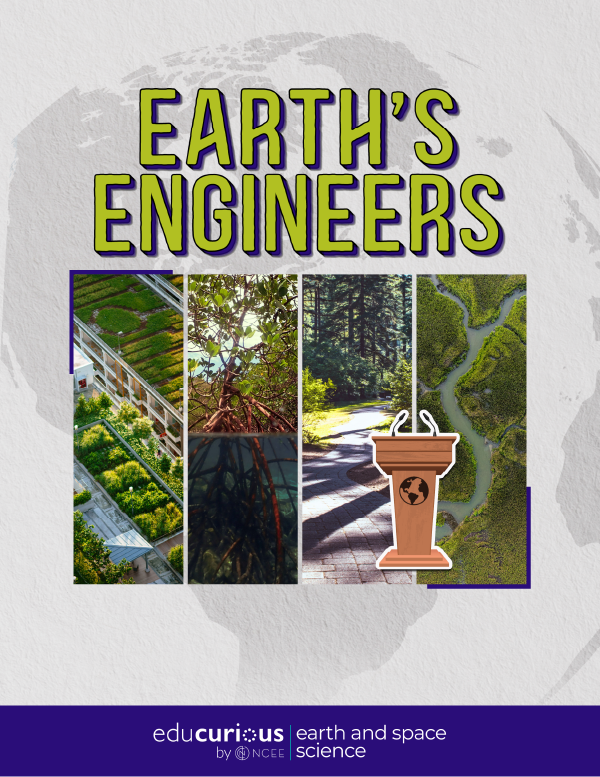
How could geoengineering be used as a tool to address Earth’s climate conditions?
Students examine how environmental change impacts communities and use climate data to uncover patterns in Earth’s systems. In teams, they design evidence-based geoengineering solutions, refine them through the Engineering Design Process, and present their ideas at a Youth Climate Engineers Summit.
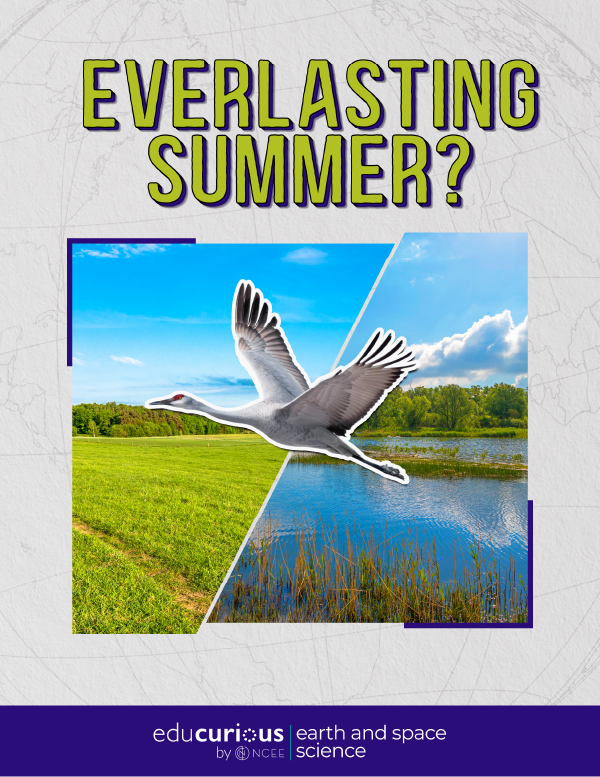
Everlasting Summer
How can some birds experience two summers a year?
Students investigate why some migratory birds experience two summers a year. They model Earth–Sun relationships, analyze daylight patterns, and use evidence to explain why seasons change in opposite ways across hemispheres. Through hands-on modeling, data analysis, and peer feedback, students refine their explanations and create a final pocket model that shows how birds follow summer across the globe.
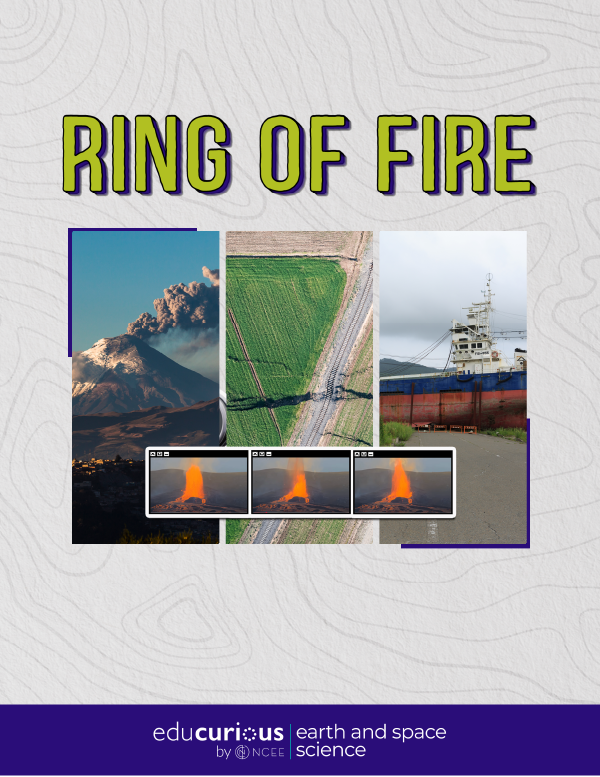
Ring of Fire
Is it possible for people to live safely along the Ring of Fire?
Students investigate plate tectonics and natural hazards by focusing on real locations along the Pacific Rim. They analyze data, model geologic processes, and explain why earthquakes and volcanoes cluster in this region. Working in teams, students assess risk, explore hazard-mitigation strategies, and create a three-part documentary that communicates their evidence-based findings.
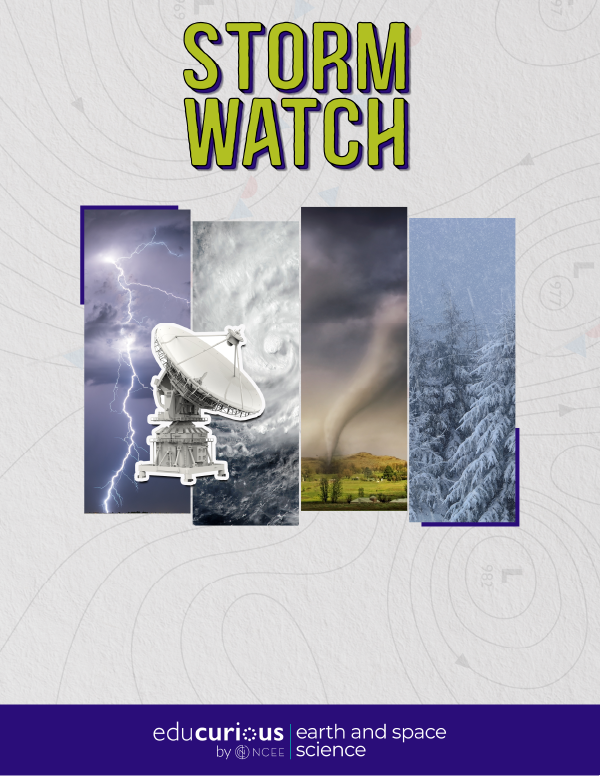
Storm Watch
How can we predict which storms will disrupt our lives?
Students explore how the uneven heating of Earth creates air masses, winds, and the conditions that generate storms. Acting as meteorologists, they analyze weather data, model storm formation, and practice real meteorological forecasting. Students apply their learning by producing a two-part weather broadcast with storm predictions and safety guidance.
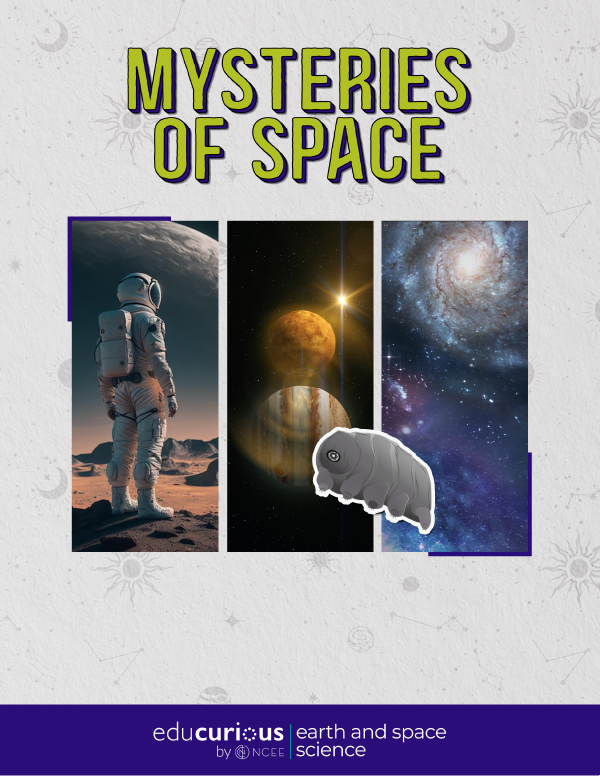
Mysteries of Space
Where would you search for life in space?
Students launch a focused, creative investigation of how conditions in space shape possibilities for life in the harshest environments. They explore space systems by modeling the solar system, analyzing data on planets and moons, and explaining how gravity and motion interact. They then design a model organism inspired by real extremophiles who may be able to live in environments beyond Earth.
Life Science
Our Life Science course brings biology off the page and into students’ hands. Through engaging investigations, learners explore evolution, ecosystems, genetics, and cellular processes while solving real-world problems.
From analyzing fossils and designing species habitats to examining DNA damage and tackling algal blooms, students think and work like scientists. Three-dimensional assessments capture their growing ability to model, argue from evidence, and design meaningful solutions.
A course that makes biology vivid, relevant, and unforgettable.
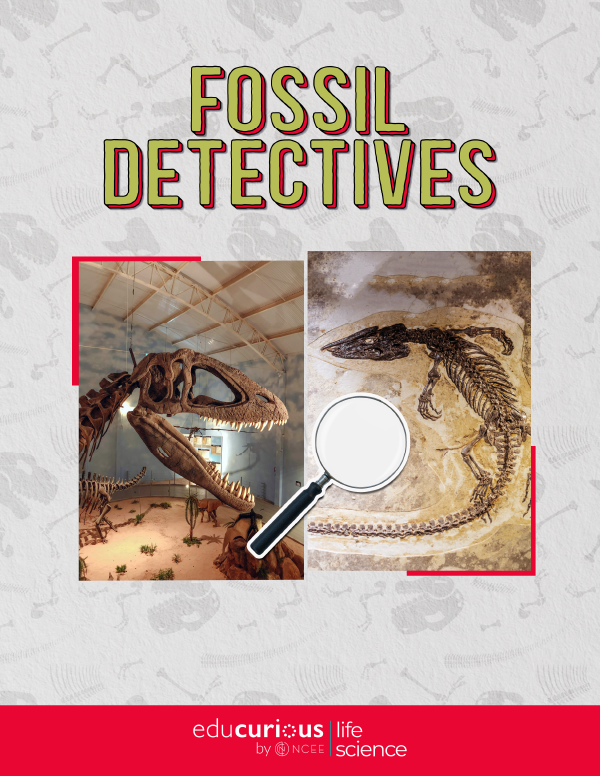
Fossil Detectives
How can we use science to find out if a fossil is authentic and not fake?
Students investigate a mysterious specimen that may link elephants, rock hyraxes, and manatees. They analyze evidence, compare traits, and interpret rock and embryological data to uncover evolutionary connections. Their work culminates in a Fossil Case File, presenting their scientific argument about the fossil’s authenticity and what it reveals about life on Earth.
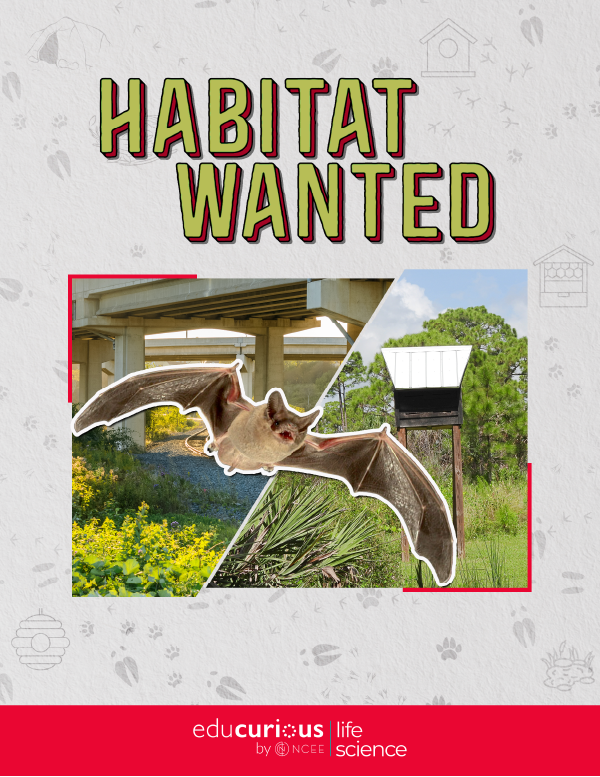
Habitat Wanted
After their habitat is destroyed, what do animals need to survive in a new place?
Students step into the role of habitat designers to help a bat colony displaced by Hurricane Harvey. They investigate how organisms interact within ecosystems, exploring energy flow, matter cycling, and the impacts of human activity. Drawing on their findings, students create and refine evidence-based habitat plans that support displaced species and show how ecosystems respond to change.
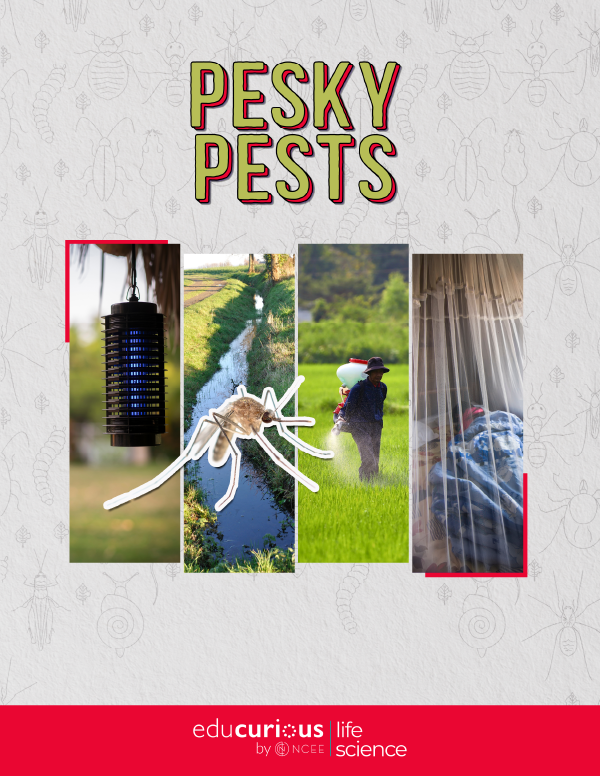
Pesky Pests
Why are pests “bugging” us more, and what can we do about it?
Students investigate how organisms survive and adapt over time, using the world’s deadliest animal, the mosquito, as their starting point. They explore how pests use traits and behaviors to thrive alongside humans and analyze how natural selection drives changes such as pesticide resistance. In their final video project, students explain how and why their chosen pest persists in human environments.
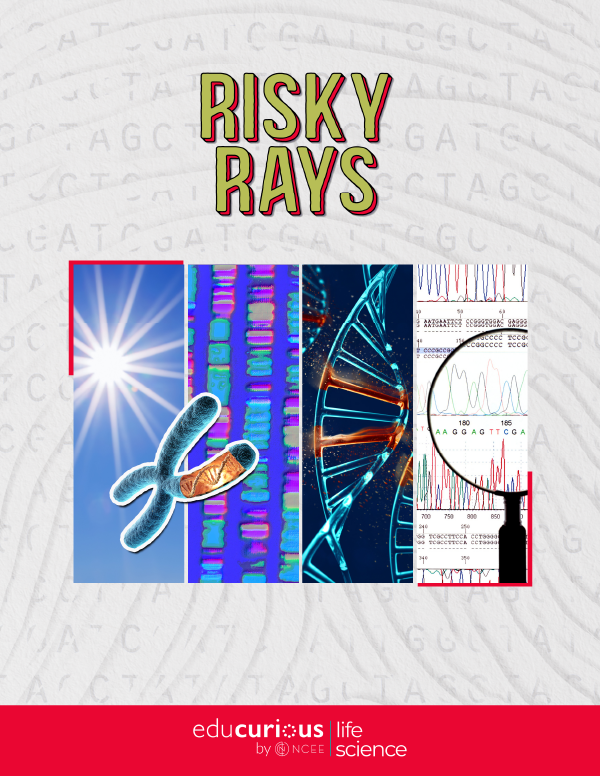
Risky Rays
Why are some people “allergic” to the sun?
Students explore the science behind genetic disorders through the case of xeroderma pigmentosum, a condition that makes people extremely sensitive to sunlight. They investigate how DNA, genes, and proteins work together to determine traits and how mutations can disrupt those processes. For their final project, students create a solution or product to support someone living with a genetic disorder and present their findings to demonstrate how genetics connects to real lives.
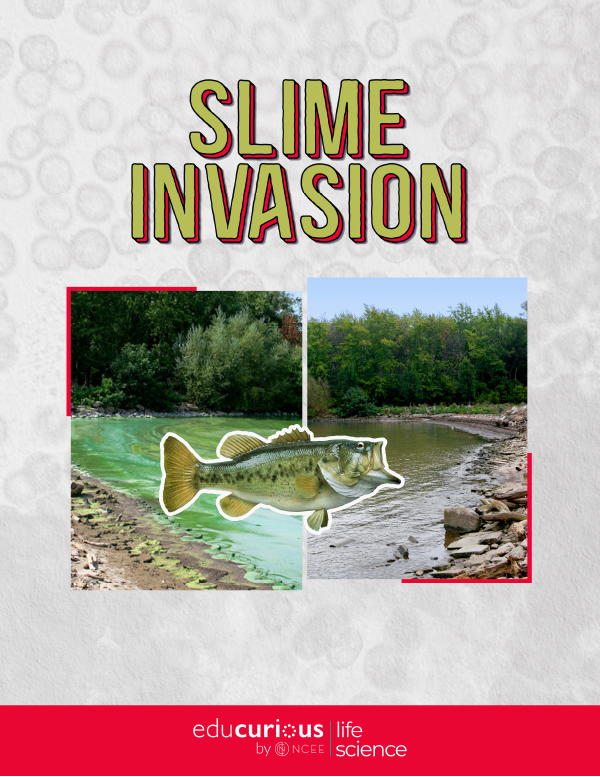
Slime Invasion
How can we stop a killer slime invasion?
Students dive into a mysterious slime invasion to uncover how living things get and use energy. They explore cells, body systems, and the processes of photosynthesis and respiration to understand how organisms survive and grow. Using real environmental data, students investigate what causes algae to overgrow and harm ecosystems, then design and present an Algae Action Plan with solutions to restore balance to local waterways.
Physical Science
Educurious’s Physical Science course turns core concepts such as forces, energy, matter, waves, and electromagnetism into hands-on, real-world design challenges. Students engineer parachute systems for disaster relief, create superheroes grounded in real chemistry, evaluate emerging technologies through wave behavior, and invent magnetic toys using electromagnetic forces.
Throughout the course, students model, test, analyze data, and apply the engineering design process to solve practical problems. Three-dimensional assessments capture their understanding of scientific ideas and their ability to use evidence in creative, meaningful ways.
A course that makes physical science active, relevant, and impossible to forget.
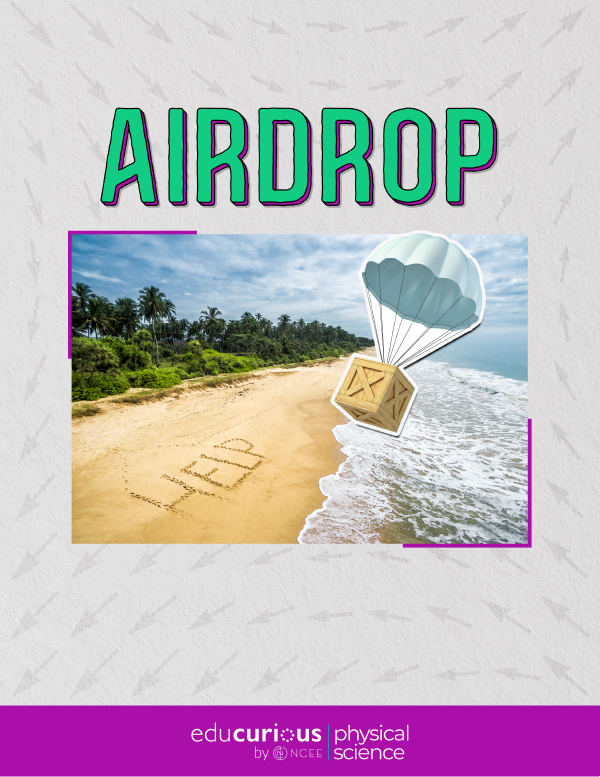
Air Drop
How can we design a parachute system to safely deliver supplies to a disaster area?
Students tackle a real-world challenge of delivering supplies safely to a disaster zone. They investigate how mass, gravity, air resistance, and energy affect motion, then apply those principles to design, test, and refine a parachute system that protects its cargo. The unit culminates in a Disaster Relief Action Plan and a competitive prototype showcase that highlights each team’s engineering solutions.
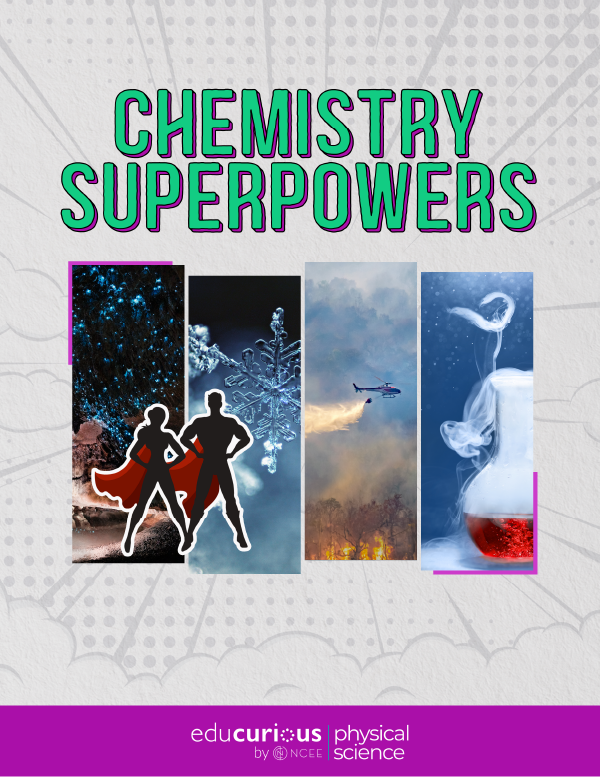
Chemistry Superpowers
How can we use chemistry-inspired superpowers to solve a local problem?
students explore atoms, molecules, and chemical reactions by asking a big question: could superpowers be rooted in real science? They investigate matter and phase changes, analyze physical and chemical reactions, and design a thermal energy device to test their ideas. They then apply what they’ve learned to create a fictional superhero whose powers are grounded in chemistry, showcasing their understanding through illustrated or animated stories that solve real-world problems.
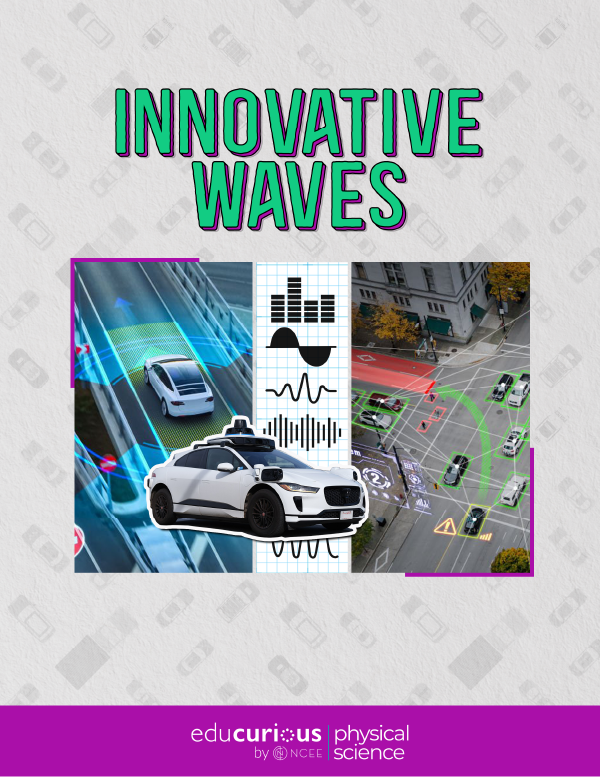
Innovative Waves
Should our community be an early adopter of next-generation self-driving cars? Why or why not?
Students explore how waves power technologies like 6G networks and self-driving cars. They investigate mechanical and electromagnetic waves, model how signals travel and interact with obstacles, and compare the reliability of digital and analog signals. Through simulations, data analysis, and evidence-based argumentation, students examine how these technologies work and the ethical questions they raise. The unit culminates with students advising community leaders on whether—and how—to adopt emerging technologies.
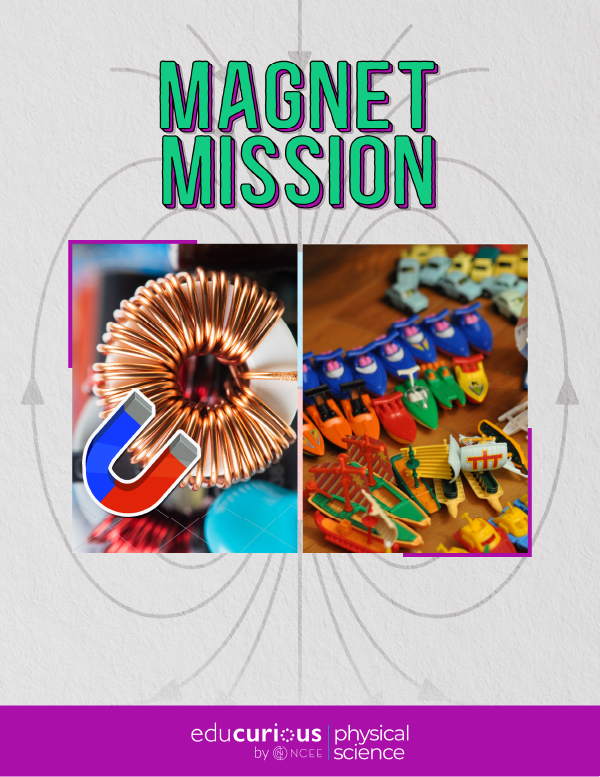
Magnet Mission
How can we build a toy that uses magnets?
Students explore magnetic and electromagnetic forces as they engineer their own functional magnetic toy. They investigate magnetic phenomena, model interactions at the atomic level, and experiment with magnetic and electric forces to inform their designs. Students gather data, refine prototypes with feedback, and explain how their toys use magnetic or electromagnetic forces and demonstrate final creations in a Magnetic Toy Expo.