
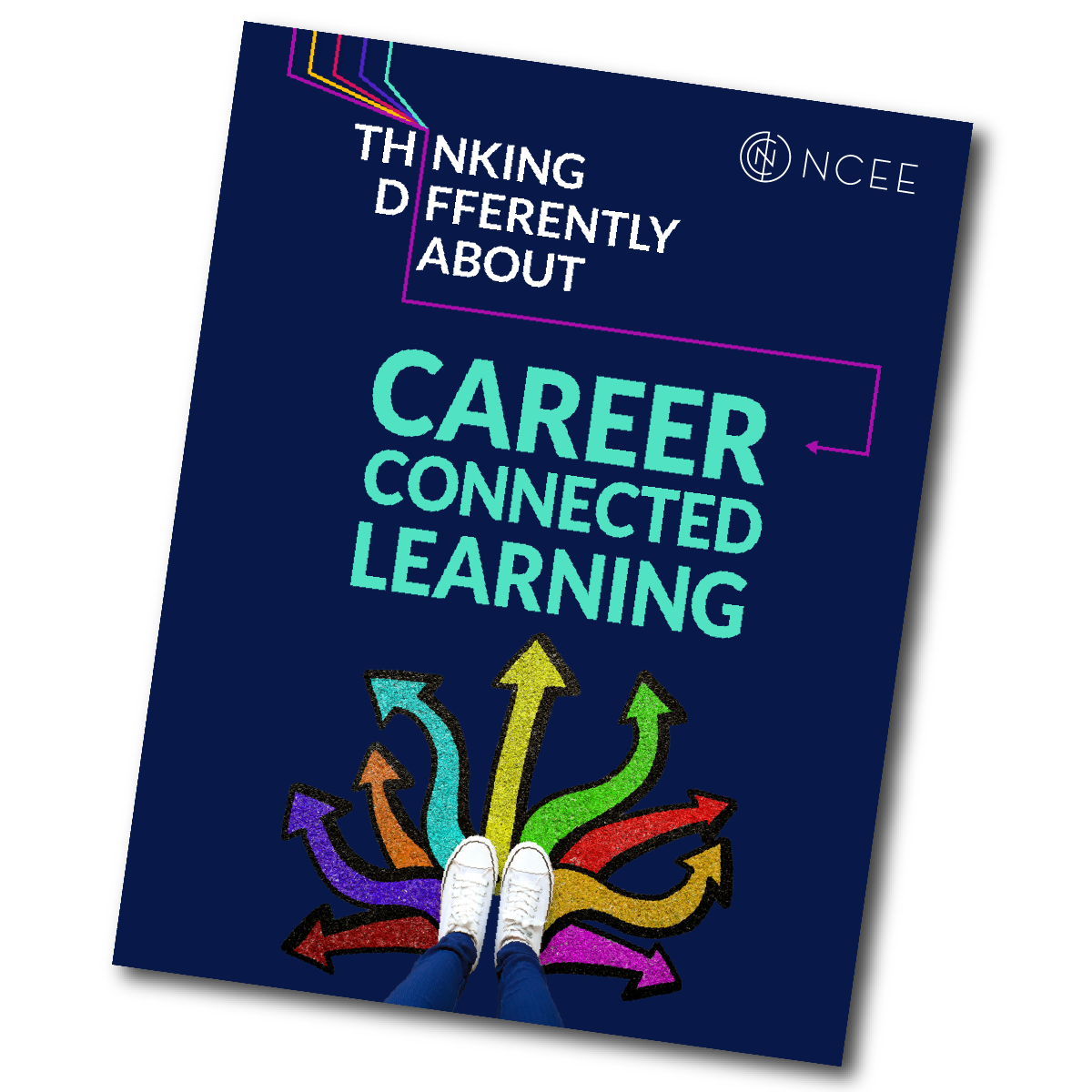
Welcome to the Thinking Differently About… series from NCEE. This series offers a different perspective on things we think about a lot in education. It’s primarily for education system designers and is meant to inspire, while also presenting global policies and practices that provide insights into how to improve success for students in the United States.
The fourth brief in the series, Thinking Differently About Career-Connected Learning, explores:
-
Thinking differently about learning goals for future-ready students. What goals do high-performing countries set to prepare all students for careers?
-
Thinking differently about scaffolding career-connected learning. How do systems scaffold career-connected learning across different levels of schooling?
-
Thinking differently about student agency and career-connected learning. How do systems enable student agency? How do they support students in making informed decisions?
-
Thinking differently about longlife credentialing systems and building pathways to prosperity. How do top performers build credentialing systems that begin in high school, enable longlife learning, and eliminate dead ends?
-
Thinking differently about breaking down silos between education and employment. How do systems connect education and employment through governance and policies?
For each topic in this series, we:
- Surface thought-provoking observations about ways these systems approach career-connected learning differently.
- Offer interesting examples of what global leaders do differently and how states and districts here at home are implementing similar strategies.
- Ask probing questions about the potential for thinking differently about career-connected learning and what the policy implications might be.
Click here to explore the other briefs in the Thinking Differently About… series.
Case Study: Building Pathways
To see what it looks like to make career-connected learning a core part of schooling, this case study takes a closer look at three places rethinking how education and workforce systems work together.
Explore how San Antonio, Texas has redesigned public high schools around industry partnerships and real workplace experiences. Learn how Indiana has built a statewide framework that aligns diplomas, credentials, and apprenticeships into clear pathways from high school to good jobs. And see how Korea has spent decades developing a longlife learning system that recognizes learning wherever it happens and supports continuous skill-building across a career.
Together, these examples show how systems can move beyond isolated programs to create coherent pathways that prepare all learners for life after graduation in our Case Study: Building Pathways.