
Onward
Together

Onward
Together
Onward
Together
Featured blog posts

How are districts actually changing and adapting to prepare students for the future and their life beyond K-12? What does this look like in practice, and how does a district move toward a new system, one that is learner-centered and future-ready?
A Las Vegas principal used the upheaval of the pandemic as a chance to ground the school’s professional learning in teacher-led inquiry.
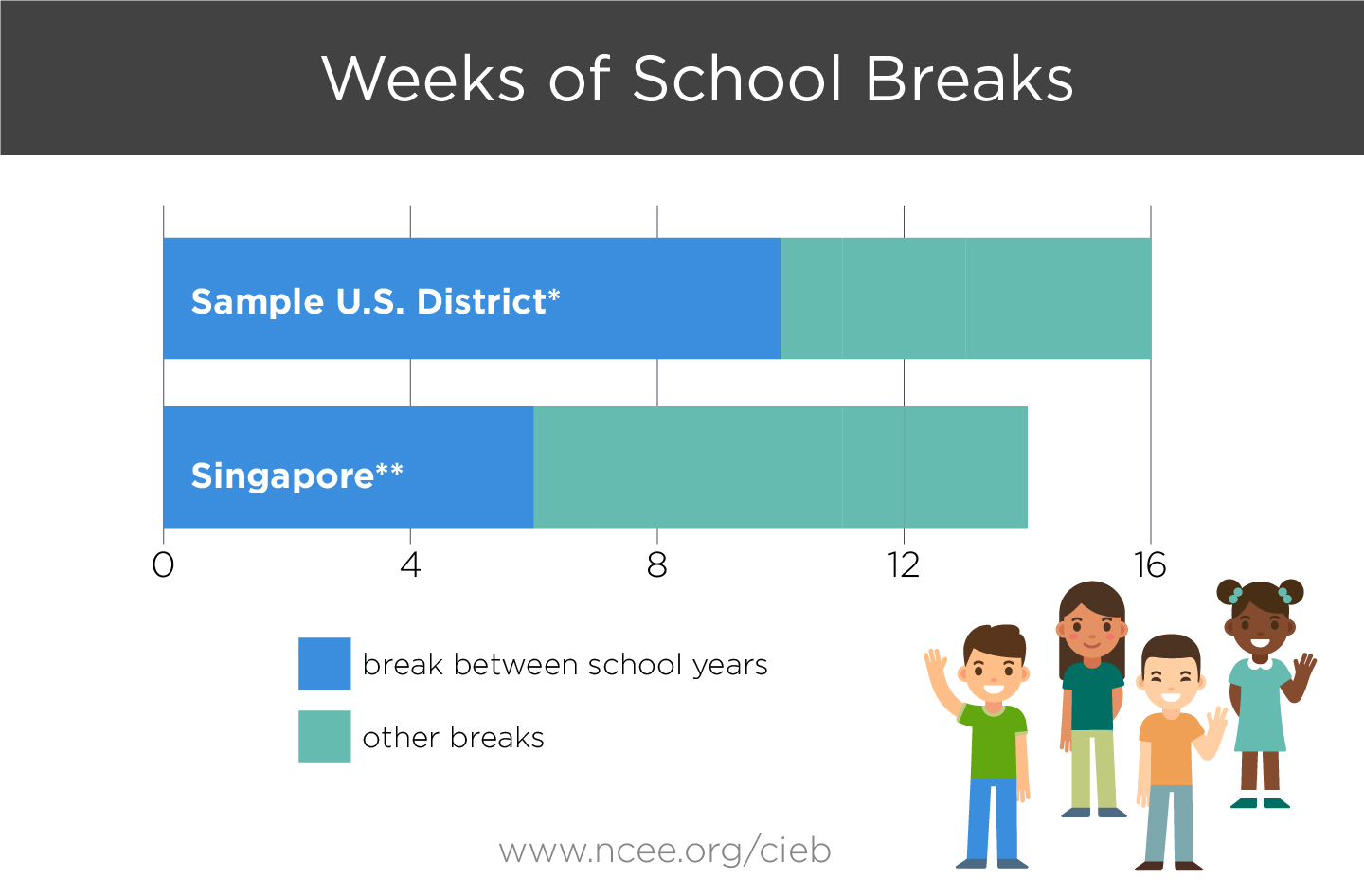
While U.S. districts are very focused on how to use the summer to address pandemic-related learning loss specifically, there are still long-standing concerns about the “summer learning slide” due to the long break from school, especially for disadvantaged students who often do not have access to the learning opportunities that their more advantaged ...
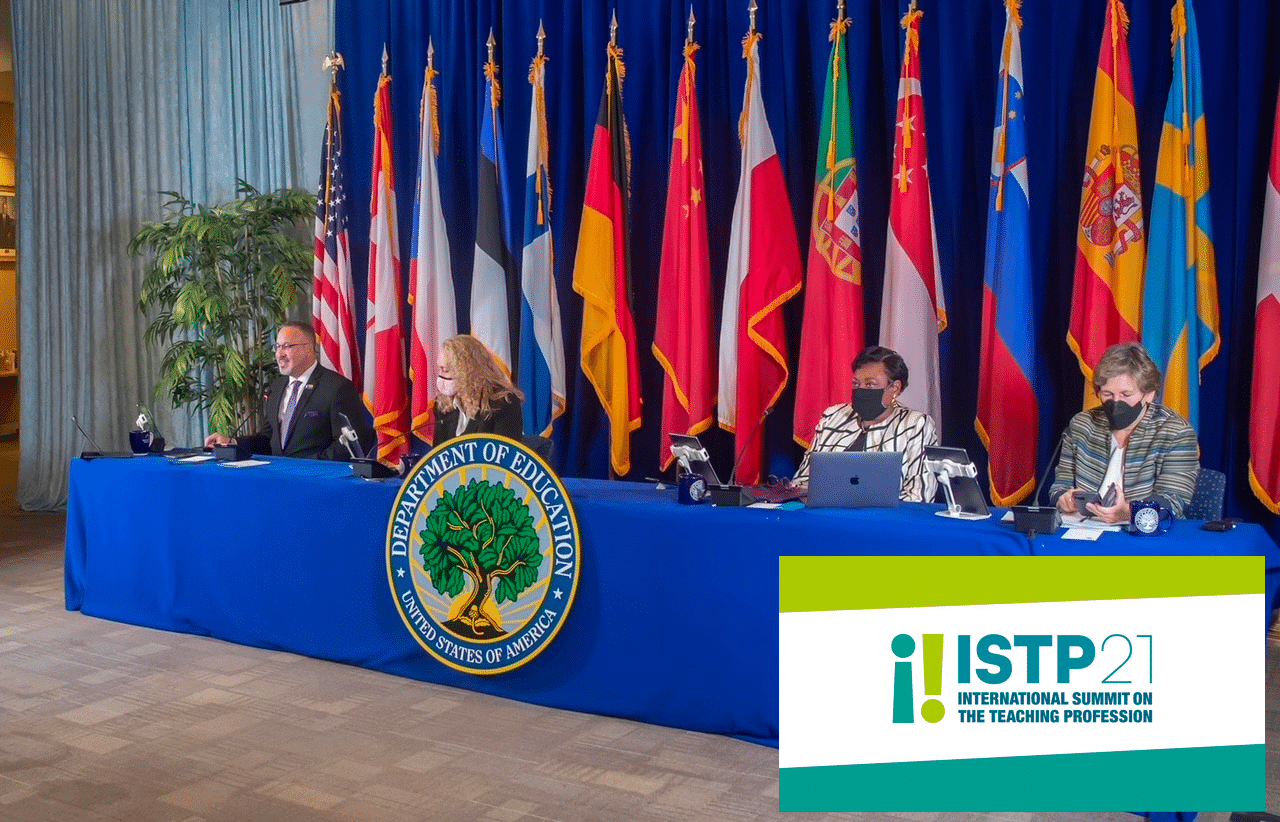
In this report from the 2021 International Summit on the Teaching Profession, NCEE summarizes the latest thinking of ministers and teachers’ unions from 15 high-performing education systems about how schools can advance an equitable, whole child agenda.
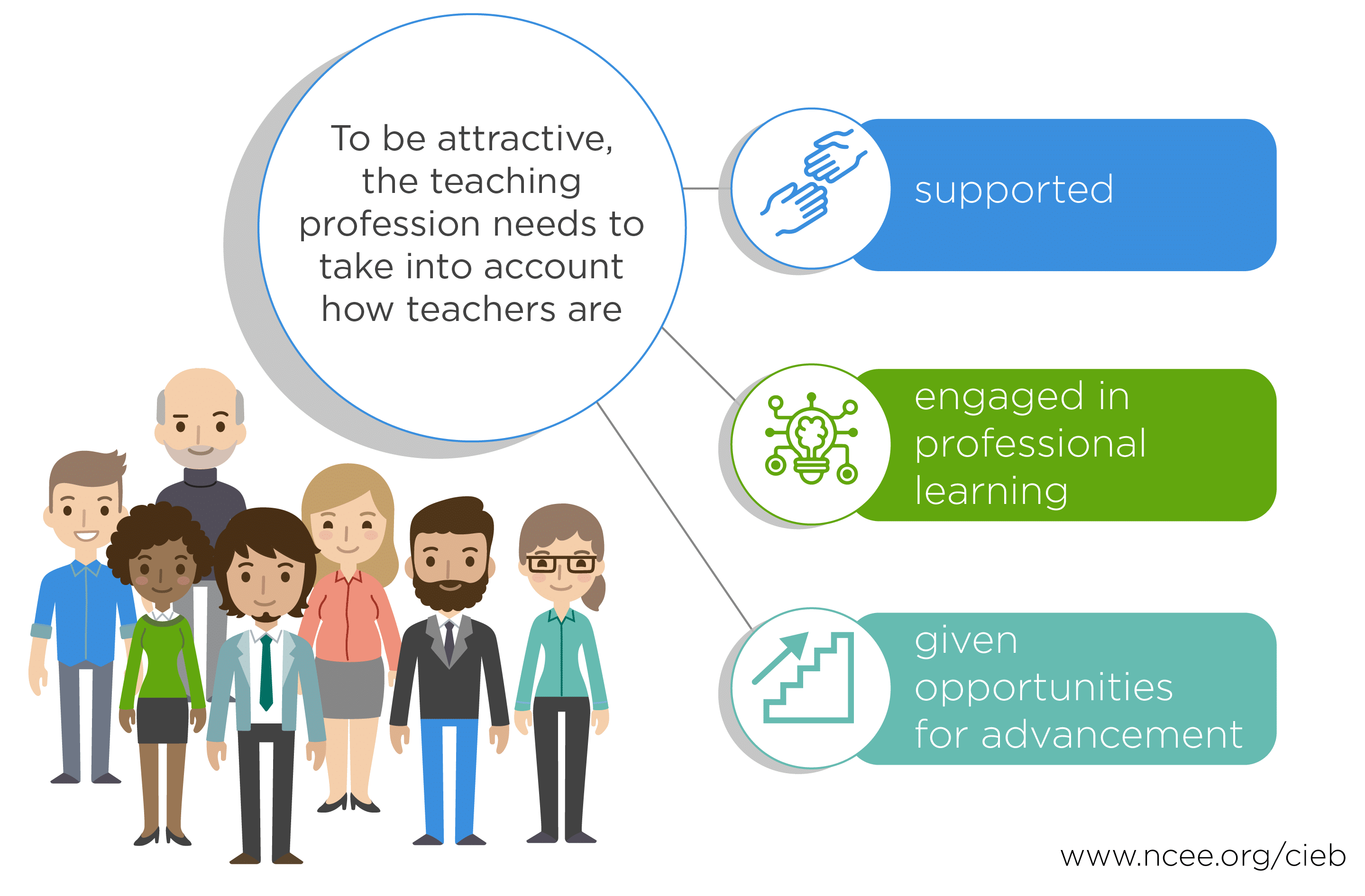
Note: This story previously listed recruitment and retention strategies as those of the United Kingdom. The strategies discussed below are specific to England. It has been updated to reflect this correction. As shortages of teachers affect school districts across the U.S. and around the world, many systems are discussing possible raises and other ...

A new “gold standard” research study shows that NCEE’s NISL program for school leaders along with aligned coaching leads to measurable improvement in student learning. The study — just published in the journal Educational Evaluation and Policy Analysis — meets the strong evidence criteria necessary for Tier One classification under ESSA and will ...
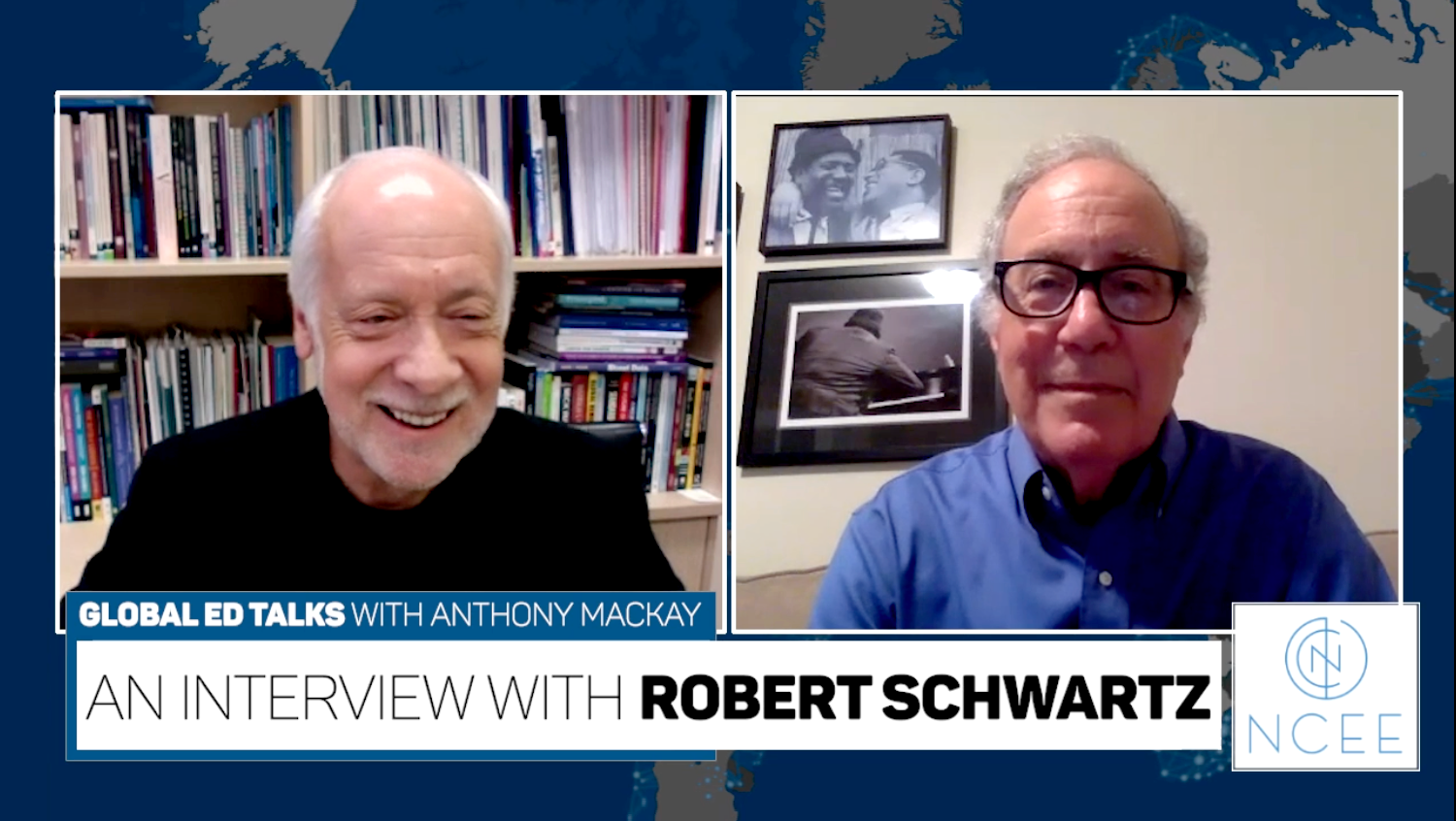
In this Global Ed Talk, NCEE CEO Anthony Mackay speaks with Bob Schwartz, professor at Harvard University and co-founder of the Pathways to Prosperity network, about what America needs to do to update its CTE system to match leading countries around the world.

By Monica Pfister At a recent event celebrating the release of The Early Advantage 2: Building Systems That Work for Young Children, the product of a multi-year study of innovative early childhood education and care (ECEC) systems led by world-renowned expert Sharon Lynn Kagan and funded and supported by NCEE, the focus was ...

By Jennifer Craw The Maryland Commission on Innovation and Excellence in Education has recommended that the state expand its current early childhood education program so that all 4-year-olds, regardless of income, and all 3-year-olds from low-income families have an opportunity to enroll in a quality full-day program. The Commission suggests that this can ...
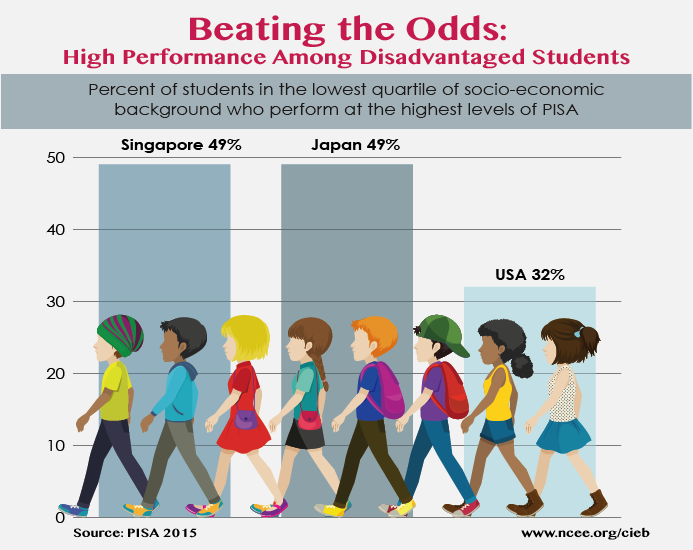
By Jennifer Craw This month we look at high-performing education systems which are also notable for their high performance for all students. In 2015, nearly half of all socio-economically disadvantaged students in Singapore and Japan performed at the highest levels on the science portion of the PISA exam. Find out more about how ...
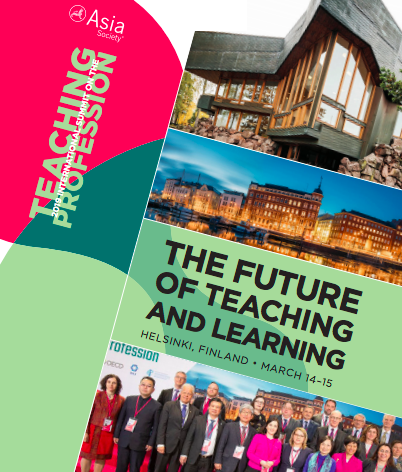
On March 14-15 this year, education ministers, master teachers, national union leaders, and education organization leaders from countries with high performing and rapidly improving educational systems met in Helsinki for the ninth annual International Summit on the Teaching Profession. Hosted by the government of Finland, the Organisation for Economic Cooperation and Development (OECD), ...

Some of the best early childhood education systems in the world have clear pathways for career development for early childhood educators.
By Monica Pfister While the top performers vary in the approaches that have led to their high performance to-date, they share a common commitment to continuous improvement. This includes a willingness to re-examine and revise existing practices, even those central to the structure of their current education system, with an eye toward creating ...
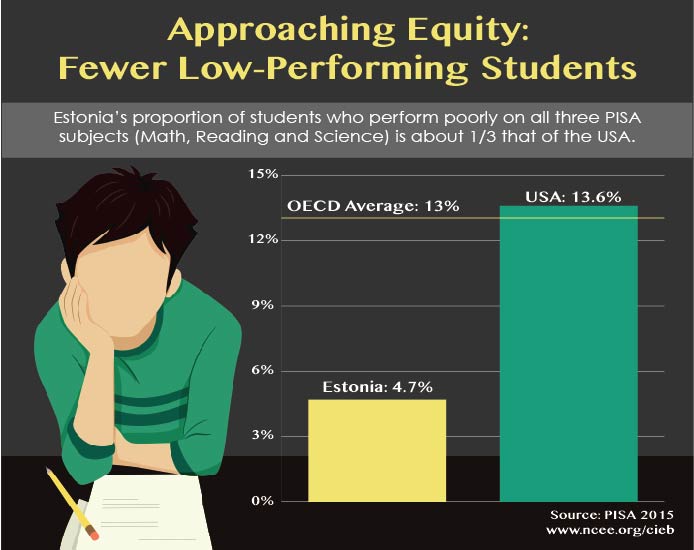
By Jennifer Craw Estonia has an exceptionally low rate of students who perform poorly on all three subjects tested by PISA (mathematics, reading and science). In fact, with only 4.7 percent of students performing below Level 2 on all three subjects, Estonia has the lowest rate of low-performers of any European country, well ...
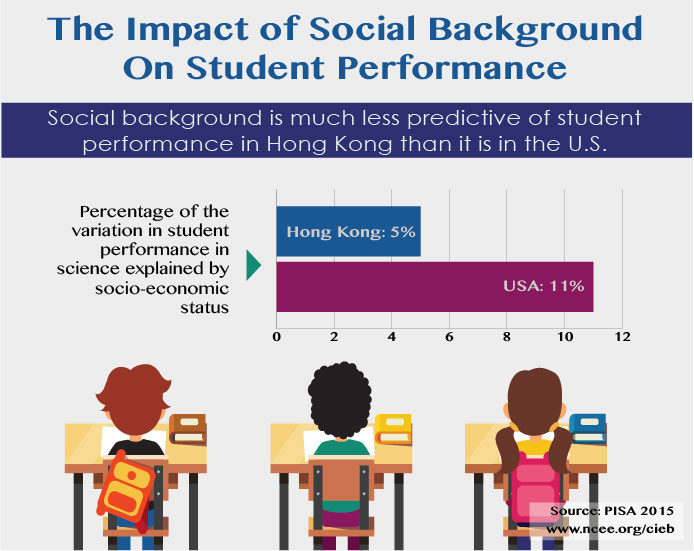
By Jennifer Craw This month we look at high-performing education systems which are also notable for their support of all students. Hong Kong has worked to significantly reduce the impact of poverty and social background on student success. In Hong Kong, social background—which includes things like relative income, parents’ education levels and parents’ occupations—explains ...
-
By Monica Pfister At a recent event celebrating the release of The Early Advantage 2: Building Systems That Work for Young Children, the product of a multi-year study of innovative early childhood education and care (ECEC) systems led by world-renowned expert Sharon Lynn Kagan and funded and supported by NCEE, the focus was ...
-
By Jennifer Craw The Maryland Commission on Innovation and Excellence in Education has recommended that the state expand its current early childhood education program so that all 4-year-olds, regardless of income, and all 3-year-olds from low-income families have an opportunity to enroll in a quality full-day program. The Commission suggests that this can ...
-
By Jennifer Craw This month we look at high-performing education systems which are also notable for their high performance for all students. In 2015, nearly half of all socio-economically disadvantaged students in Singapore and Japan performed at the highest levels on the science portion of the PISA exam. Find out more about how ...
-
On March 14-15 this year, education ministers, master teachers, national union leaders, and education organization leaders from countries with high performing and rapidly improving educational systems met in Helsinki for the ninth annual International Summit on the Teaching Profession. Hosted by the government of Finland, the Organisation for Economic Cooperation and Development (OECD), ...
-
Some of the best early childhood education systems in the world have clear pathways for career development for early childhood educators.
-
By Monica Pfister While the top performers vary in the approaches that have led to their high performance to-date, they share a common commitment to continuous improvement. This includes a willingness to re-examine and revise existing practices, even those central to the structure of their current education system, with an eye toward creating ...
-
By Jennifer Craw Estonia has an exceptionally low rate of students who perform poorly on all three subjects tested by PISA (mathematics, reading and science). In fact, with only 4.7 percent of students performing below Level 2 on all three subjects, Estonia has the lowest rate of low-performers of any European country, well ...
-
By Jennifer Craw This month we look at high-performing education systems which are also notable for their support of all students. Hong Kong has worked to significantly reduce the impact of poverty and social background on student success. In Hong Kong, social background—which includes things like relative income, parents’ education levels and parents’ occupations—explains ...