
Onward
Together

Onward
Together
Onward
Together
Featured blog posts

This Mississippi school district is partnering with industry to design bold pathways to career readiness for its students.

From teaching nutrition to building community at school, top-performing education systems understand that free and subsidized school meals have benefits beyond keeping all students fed and ready to learn.
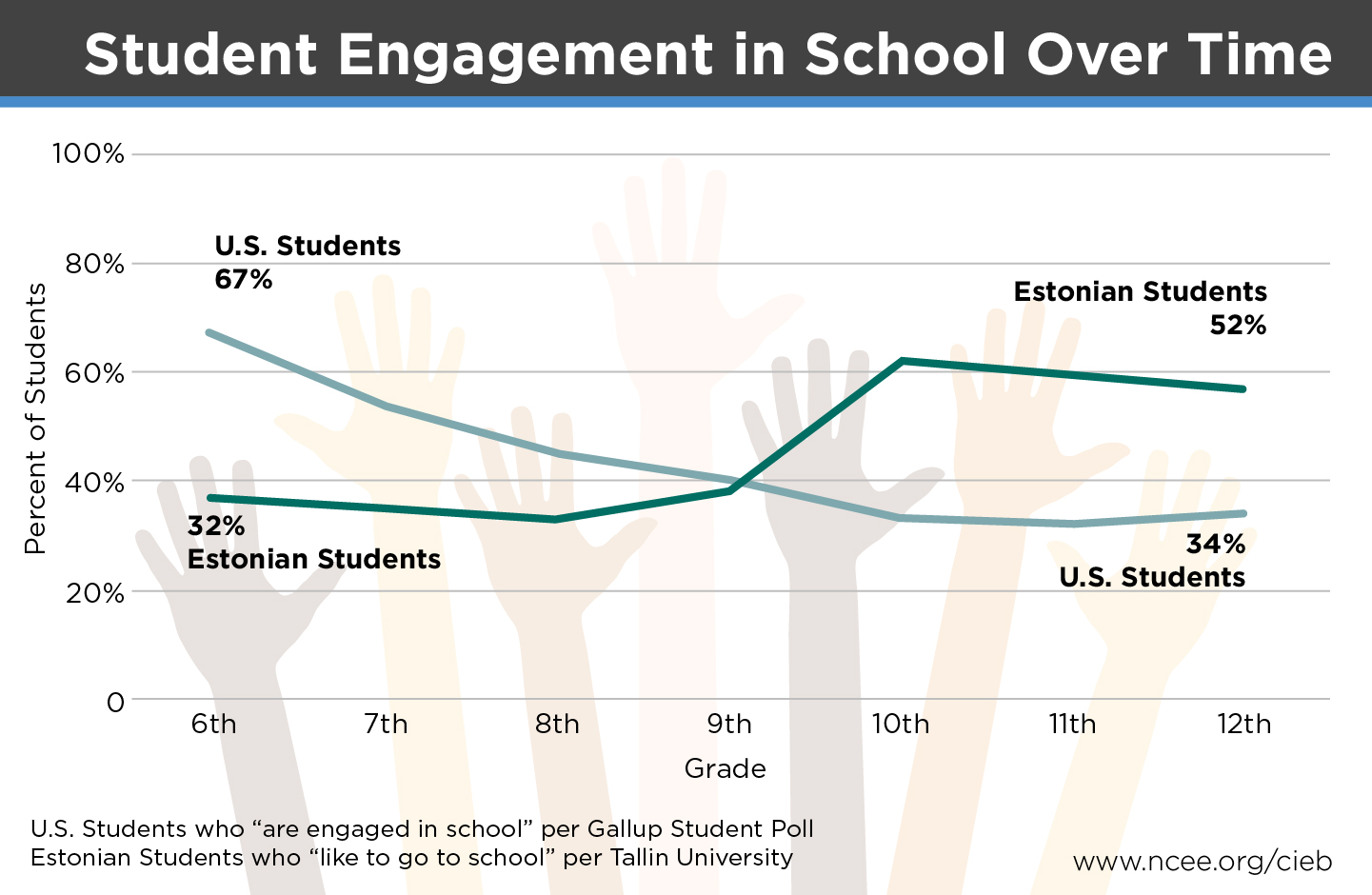
After years of disruption, student motivation in American schools is lower than ever before. What does Estonia, a country whose teens are more enthused for learning, do that U.S. schools can look to?

The pandemic has sparked widespread acknowledgment of the importance of in-person learning, the value of teacher-student relationships and the role of schools as a social hub for students, families, and communities. But that appreciation of in-person interactions does not mean that top-performing systems have just shifted back to the “old normal” as in-person ...
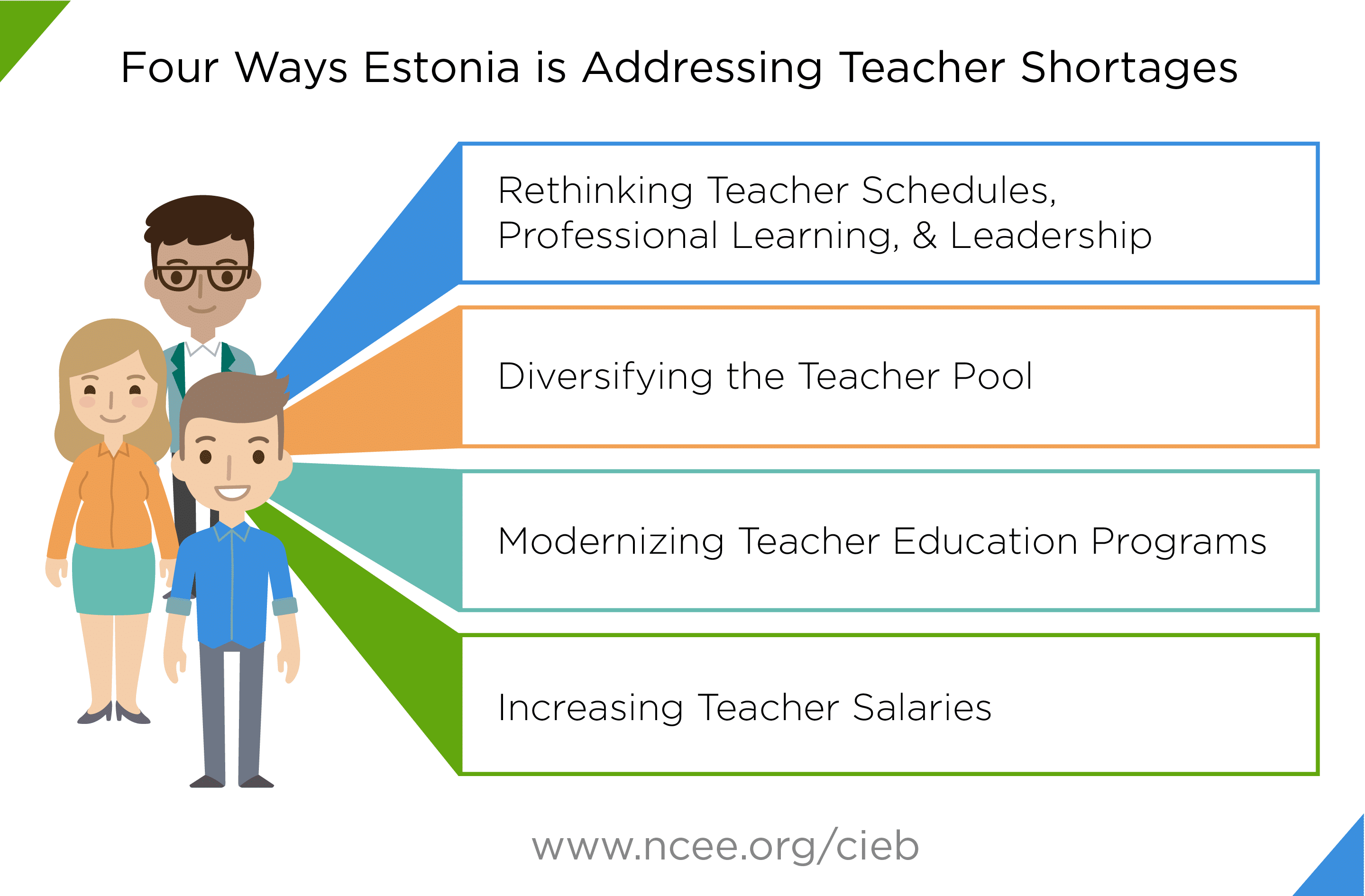
From increasing teacher pay to widening the recruitment net to rethinking the very nature of the job, Estonia’s education strategy is aimed at improving recruitment and retention of its teaching force.

America Achieves CEO Jon Schnur discusses the importance of a good jobs agenda and the role of career pathway systems for preparing children for the next economy on the latest Global Ed Talk with NCEE’s Anthony Mackay.

Expanding Access to Early Childhood Resources on a Shoestring Budget: A Superintendent Leads the Way
Drawing on lessons from high-performing education systems, a Pennsylvania superintendent found an affordable way to connect families with early childhood services, creating a model that has spread to nearly 70 school districts.

By Jennifer Craw In Switzerland, employers contribute about 60 percent of the total cost of the entire Vocational Education and Training (VET) system. Young people apprentice in companies and are paid because they contribute to the work of the company. This is not how VET works in the United States where most firms ...

By Jennifer Craw Strong vocational education and training systems in the Netherlands, Switzerland and Germany give students the skills they need to more easily transition into the workforce, resulting in a much better rate of youth in engaged in work and learning. Each of these countries has a lower rate of youth ages ...

By Jennifer Craw Teachers in the Unites States spend many more hours per year in front of classes than do their international counterparts. While US teachers spend most of their time in front of the class teaching, teachers in top-performing countries like South Korea, Finland and Canada are expected to spend time collaborating ...

By Jennifer Craw Top-performing systems realize the importance of deploying their teachers wisely. That’s why Japan, South Korea and Singapore rotate teachers’ school assignments periodically. This allows teachers to work with and learn from a broad range of their peers, experience different school contexts including those in rural and urban schools, and teach ...

In Shanghai, even the physical layout of schools is set up to encourage teachers to work together in professional collaboration.

In 2006, Ontario, Canada realized that in nearly a fifth of the elementary schools in the province, more than half of students scored below the provincial standard in math, reading and writing. In response, the province invested in a program called Ontario Focused Intervention Partnership.

All teachers in Estonia, Finland, Shanghai, and South Korea are trained to both action and quantitative research.

Leaders from Maryland and national education experts lauded a blueprint for education reform released by a 25-member Maryland commission and said it could vault the state into global leadership in education performance and serve as a model for the nation during an event on June 6 in Washington, DC hosted by NCEE. The ...
-
By Jennifer Craw In Switzerland, employers contribute about 60 percent of the total cost of the entire Vocational Education and Training (VET) system. Young people apprentice in companies and are paid because they contribute to the work of the company. This is not how VET works in the United States where most firms ...
-
By Jennifer Craw Strong vocational education and training systems in the Netherlands, Switzerland and Germany give students the skills they need to more easily transition into the workforce, resulting in a much better rate of youth in engaged in work and learning. Each of these countries has a lower rate of youth ages ...
-
By Jennifer Craw Teachers in the Unites States spend many more hours per year in front of classes than do their international counterparts. While US teachers spend most of their time in front of the class teaching, teachers in top-performing countries like South Korea, Finland and Canada are expected to spend time collaborating ...
-
By Jennifer Craw Top-performing systems realize the importance of deploying their teachers wisely. That’s why Japan, South Korea and Singapore rotate teachers’ school assignments periodically. This allows teachers to work with and learn from a broad range of their peers, experience different school contexts including those in rural and urban schools, and teach ...
-
In Shanghai, even the physical layout of schools is set up to encourage teachers to work together in professional collaboration.
-
In 2006, Ontario, Canada realized that in nearly a fifth of the elementary schools in the province, more than half of students scored below the provincial standard in math, reading and writing. In response, the province invested in a program called Ontario Focused Intervention Partnership.
-
All teachers in Estonia, Finland, Shanghai, and South Korea are trained to both action and quantitative research.
-
Leaders from Maryland and national education experts lauded a blueprint for education reform released by a 25-member Maryland commission and said it could vault the state into global leadership in education performance and serve as a model for the nation during an event on June 6 in Washington, DC hosted by NCEE. The ...