
Onward
Together
Onward
Together
Onward
Together
Featured blog posts
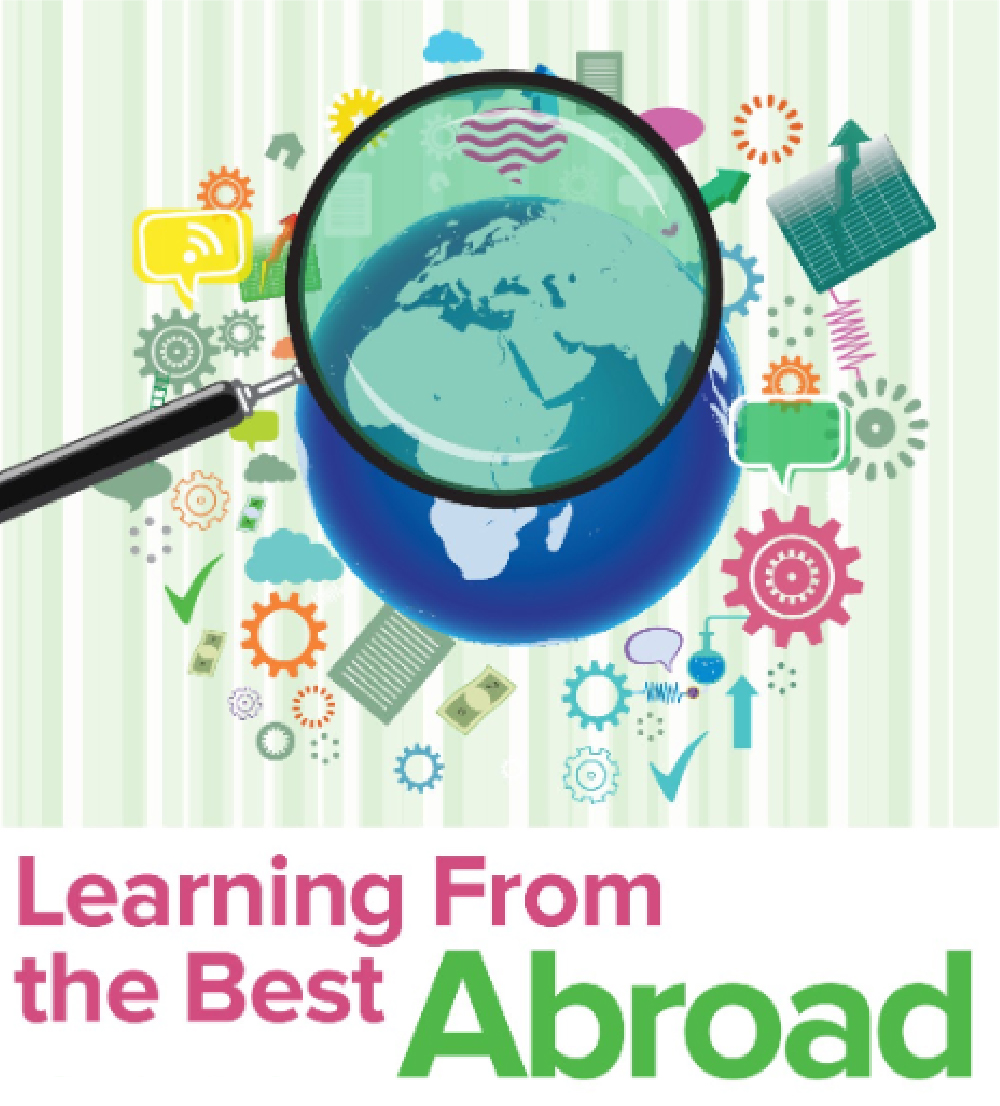
By studying high-flying schools around the world, some district leaders in the U.S. are driving transformative changes to yield better results.
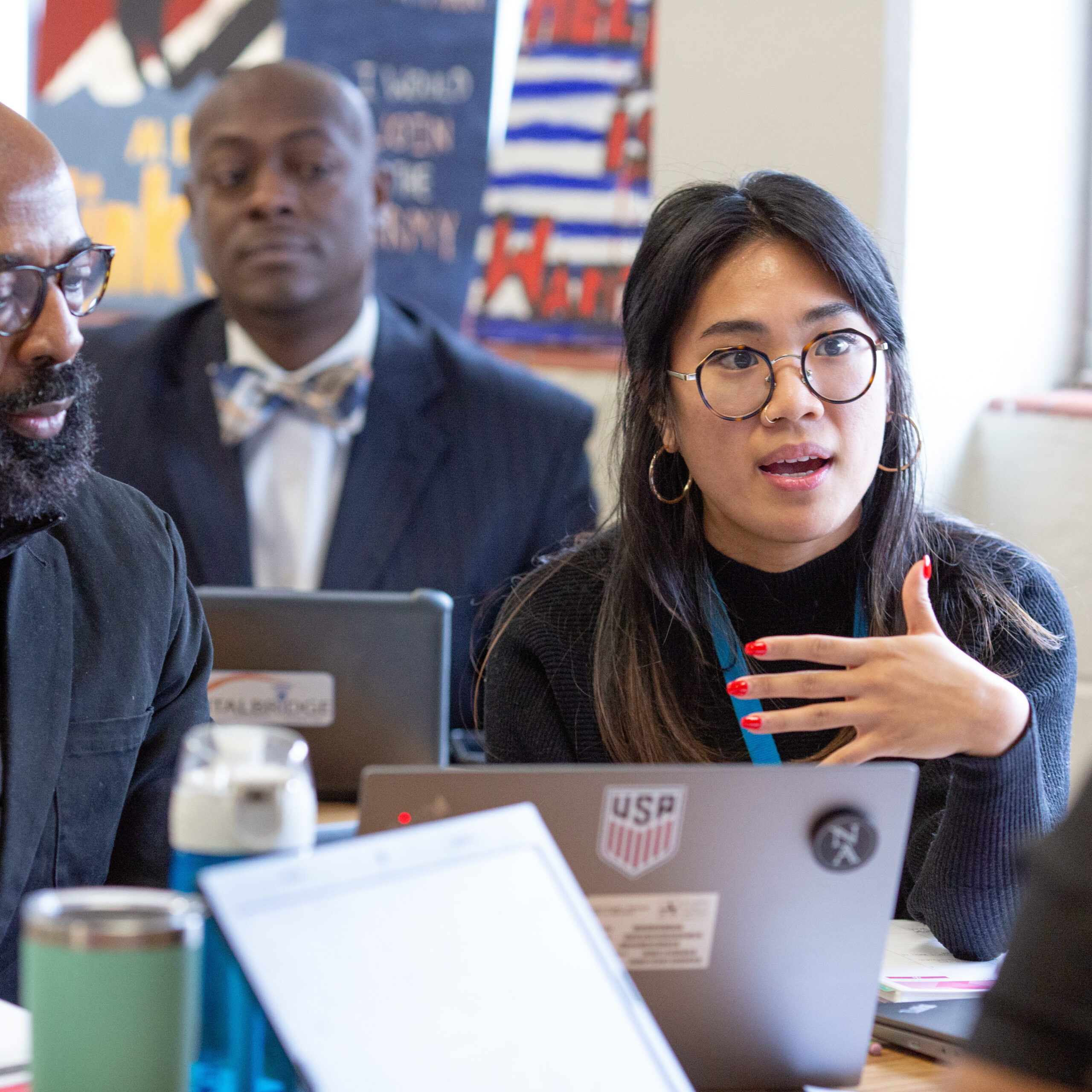
There are too many incentives for teachers to leave the classroom and not enough for them to stay, NCEE’s Jason Dougal and Ann Borthwick argue in a commentary for K-12 Dive. Dougal and Borthwick lay out a vision for an education system in which teachers’ work environment is more like that of doctors and lawyers and they are rewarded for leading the growth of their colleagues. Implementing these changes in light of current teacher shortages will attract more people to education and keep them in classrooms longer.
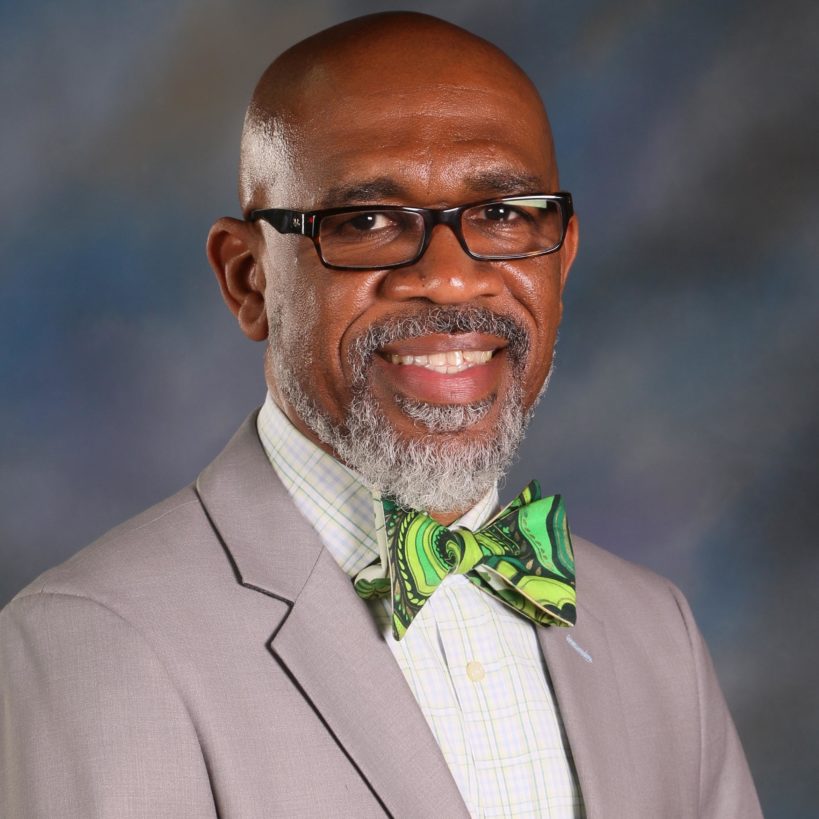
Superintendent Cederick Ellis found that replacing rigid class structures in an elementary school with a more student-tailored approach boosted student outcomes. He is now taking that approach to the rest of the schools in Mississippi’s McComb School District.
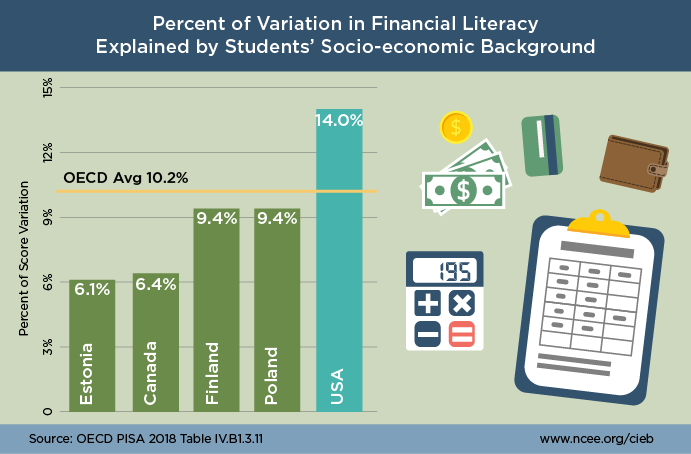
Families around the world are under financial strain due the economic disruption of the coronavirus pandemic. As such, financial literacy is increasingly important for students. The 2018 Program for International Student Assessment (PISA) included an optional section on financial literacy. This section assessed 15-year-olds’ experience with and knowledge about money and their ability ...
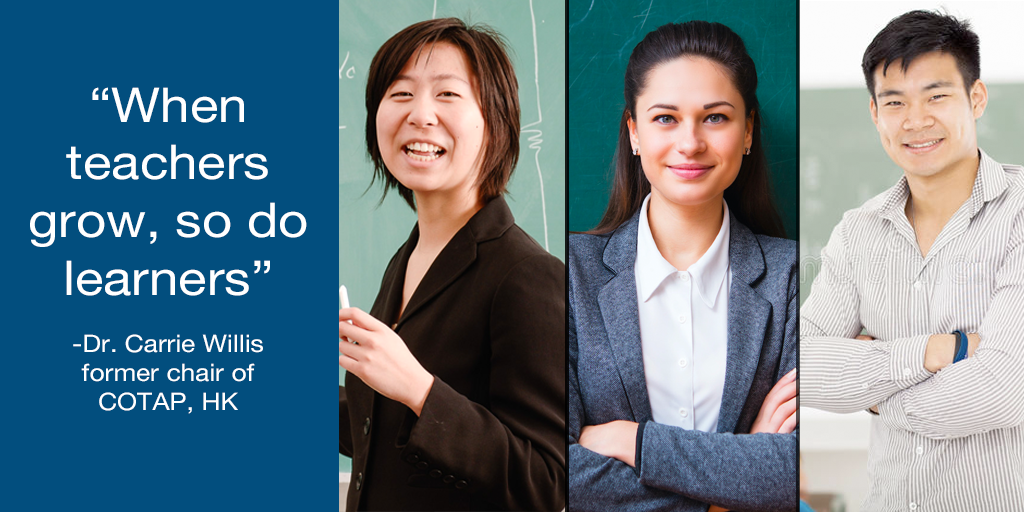
As jurisdictions around the world rethink the knowledge, skills and competencies students will need for a very different future, they are also considering what that shift means for the teaching profession. This has led to the development of new teacher competencies that reflect the broad goals that are being set for students. These competencies ...

In the sixth Global Ed Talks interview of the year, Anthony Mackay is joined by Dr. Aaron Thompson, president of the Kentucky Council on Postsecondary Education (CPE) and member of NCEE’s Board of Trustees.
In this report, NCEE recaps the 2020 virtual meeting of International Summit on the Teaching Profession that brought together education leaders from government and teachers unions from 35 leading countries: the 30 highest performing and five fastest improving on the Programme for International Student Assessment (PISA) exam.
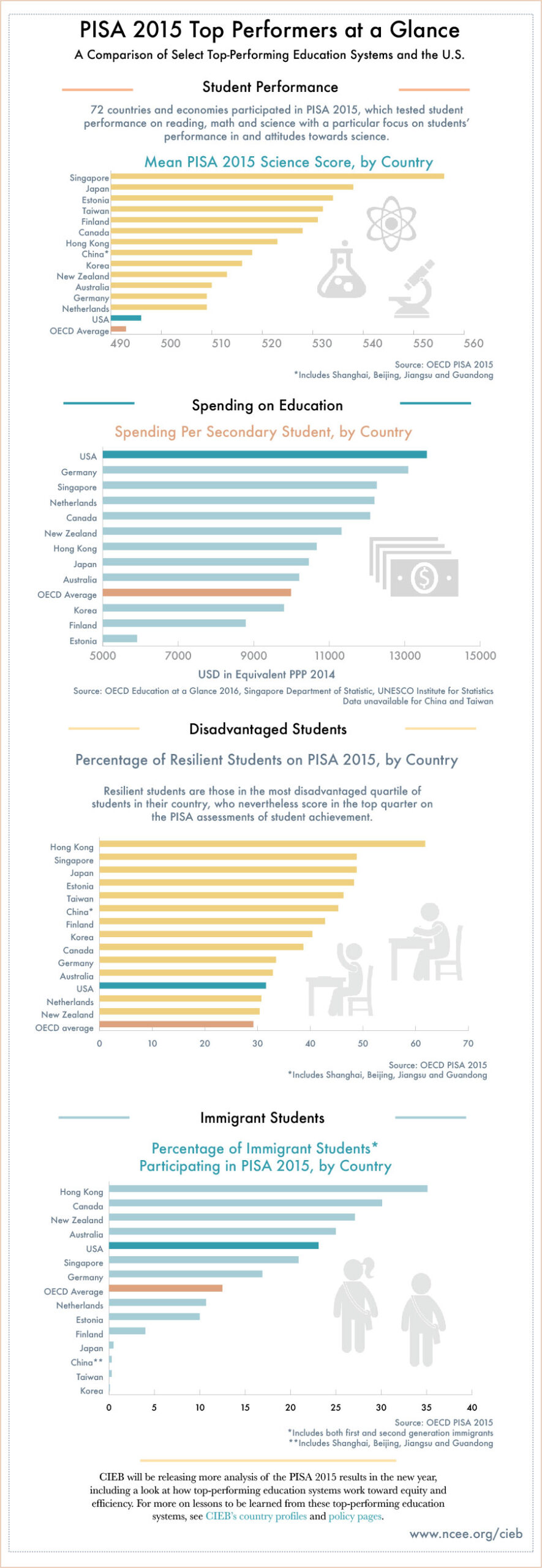
By Jennifer Craw Seventy-two countries and economies participated in the Programme for International Student Assessment (PISA) 2015, which tested student performance on reading, math and science with a particular focus on studentsʼ performance in and attitudes towards science. This month we take a look at how select top-performing education systems and the U.S. ...
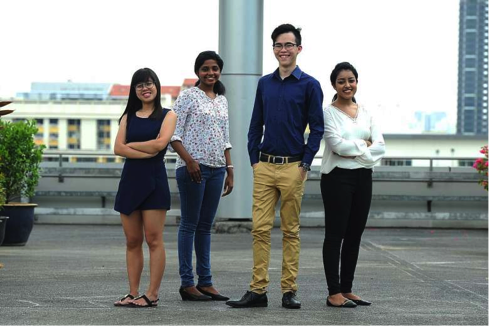
By Nathan Driskell “In the past, many of our students had dropped out of school because they couldn’t cope,” Professor Sing Kong Lee told CIEB researchers during a recent benchmarking trip to Singapore. “Now, with the implementation of the streaming system, they feel less stigmatized.” To an American audience, the statement was ...
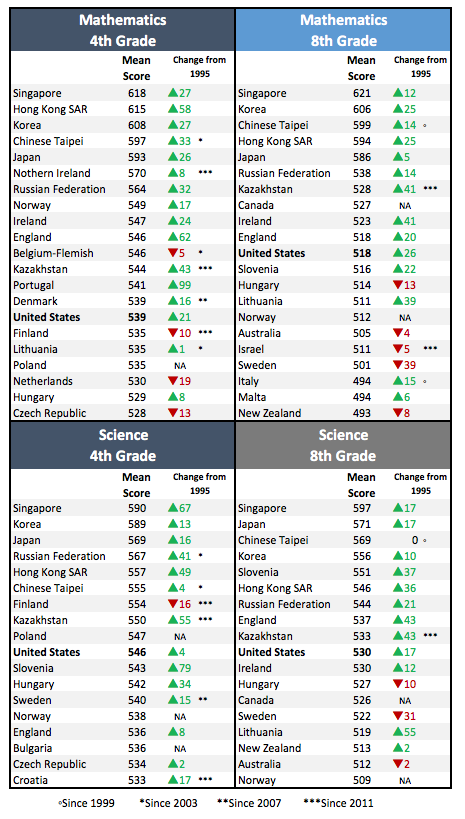
The results of the 2015 Trends in International Mathematics and Science Study (TIMSS), released on November 29, show that U.S. students, despite some gains, continue to struggle, especially compared with their peers from high-performing nations. In fourth grade mathematics, U.S. students performed below those in 10 jurisdictions, and outperformed those in 34 jurisdictions—many ...
By Bob Rothman “Welcome to the heart of teacher education,” reads a sign at the entrance to the National Institute of Education (NIE) in Singapore. Located on the campus of Nanyang Technical University, NIE is a research institution that is the sole provider of teacher preparation in the country. It also provides extensive ...

By Bob Rothman A new analysis of the Teaching and Learning International Survey (TALIS) has found that the quality of school leadership is related to the development of professional learning communities in schools. Schools in which principals focus on curriculum and instruction and in which they involve others in decision making are more ...
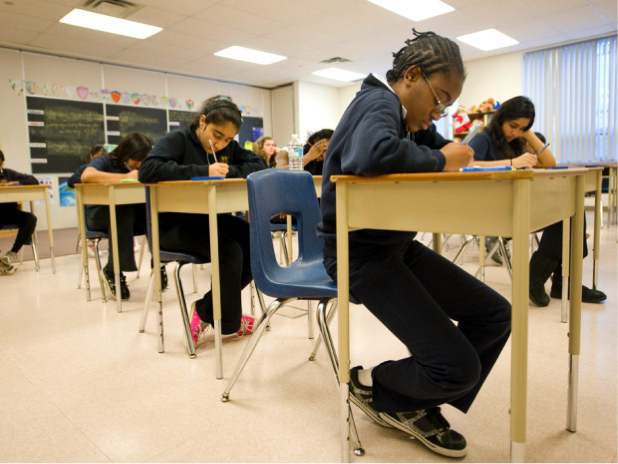
By Jackie Kraemer This year, British Columbia implemented an innovative new curriculum called Building Students Success for all kindergarten through 9th grade students in the province. The curriculum, developed by educators and based on the latest research and international best practice, is “concept-based and competency-driven.” It is designed to be flexible to ...

On a recent benchmarking trip, NCEE's team had the opportunity to see firsthand how Shanghai teachers have the time, space, and flexibility to collaborate with one another and improve as they collectively refine their work.

Ligel Lambert, a U.S. art teacher at Shanghai’s Shi Xi High School, highlights the IB program’s emphasis on independent learning, critical thinking, and English fluency, contrasting it with classroom norms in China, Japan, Korea, and the U.S.
-
By Jennifer Craw Seventy-two countries and economies participated in the Programme for International Student Assessment (PISA) 2015, which tested student performance on reading, math and science with a particular focus on studentsʼ performance in and attitudes towards science. This month we take a look at how select top-performing education systems and the U.S. ...
-
By Nathan Driskell “In the past, many of our students had dropped out of school because they couldn’t cope,” Professor Sing Kong Lee told CIEB researchers during a recent benchmarking trip to Singapore. “Now, with the implementation of the streaming system, they feel less stigmatized.” To an American audience, the statement was ...
-
The results of the 2015 Trends in International Mathematics and Science Study (TIMSS), released on November 29, show that U.S. students, despite some gains, continue to struggle, especially compared with their peers from high-performing nations. In fourth grade mathematics, U.S. students performed below those in 10 jurisdictions, and outperformed those in 34 jurisdictions—many ...
By Bob Rothman “Welcome to the heart of teacher education,” reads a sign at the entrance to the National Institute of Education (NIE) in Singapore. Located on the campus of Nanyang Technical University, NIE is a research institution that is the sole provider of teacher preparation in the country. It also provides extensive ...
-
By Bob Rothman A new analysis of the Teaching and Learning International Survey (TALIS) has found that the quality of school leadership is related to the development of professional learning communities in schools. Schools in which principals focus on curriculum and instruction and in which they involve others in decision making are more ...
-
By Jackie Kraemer This year, British Columbia implemented an innovative new curriculum called Building Students Success for all kindergarten through 9th grade students in the province. The curriculum, developed by educators and based on the latest research and international best practice, is “concept-based and competency-driven.” It is designed to be flexible to ...
-
On a recent benchmarking trip, NCEE's team had the opportunity to see firsthand how Shanghai teachers have the time, space, and flexibility to collaborate with one another and improve as they collectively refine their work.
-
Ligel Lambert, a U.S. art teacher at Shanghai’s Shi Xi High School, highlights the IB program’s emphasis on independent learning, critical thinking, and English fluency, contrasting it with classroom norms in China, Japan, Korea, and the U.S.